Research area · 2011–
How can we generate ideas, prototype quickly and evaluate a digital musical instrument — including for traditions beyond Europe and North America?
A digital musical instrument separates the control gesture from sound production and links them through digital mapping. The design space is large, prototyping is costly, and most instruments are made for European and North American experimental music. This line addresses these problems with method, a prototyping kit, and instruments made with musicians from the Northeast of Brazil. It is the line behind the most cited work in the CV and the two patents.
01 · Digital musical instruments and MusTIC
The group
MusTIC — Música, Tecnologia, Interatividade e Criatividade (Music, Technology, Interactivity and Creativity) — was born at CIn in mid-2011. Giordano Cabral coordinated the group at UFRPE from August 2011 to August 2014 and then at CIn, with Geber Ramalho and Filipe Calegário. The CNPq Universal project "Música, Tecnologia, Interatividade e Criatividade" (2013–2016), under Cabral's responsibility, aimed at a method for creating digital musical instruments, six instruments, and a prototyping tool; it involved two undergraduates, four master's students, and four doctoral students. The group described itself in its own paper at SBCM 2019 — five axes, 21 projects, 42 researchers (doi.org/10.5753/sbcm.2019.10441) — and appears on CIn's official list of research groups. Page: mustic.cin.ufpe.br.
02 · Digital musical instruments and MusTIC
Contributions
Instrument evaluation from the performer's perspective · 2011
Towards an evaluation methodology for digital musical instruments considering performer's view (XIII SBCM 2011), with Jerônimo Barbosa, Filipe Calegário, Veronica Teichrieb, Geber Ramalho and others: a case study on evaluating a new instrument from the performer's perspective. PDF in the proceedings.
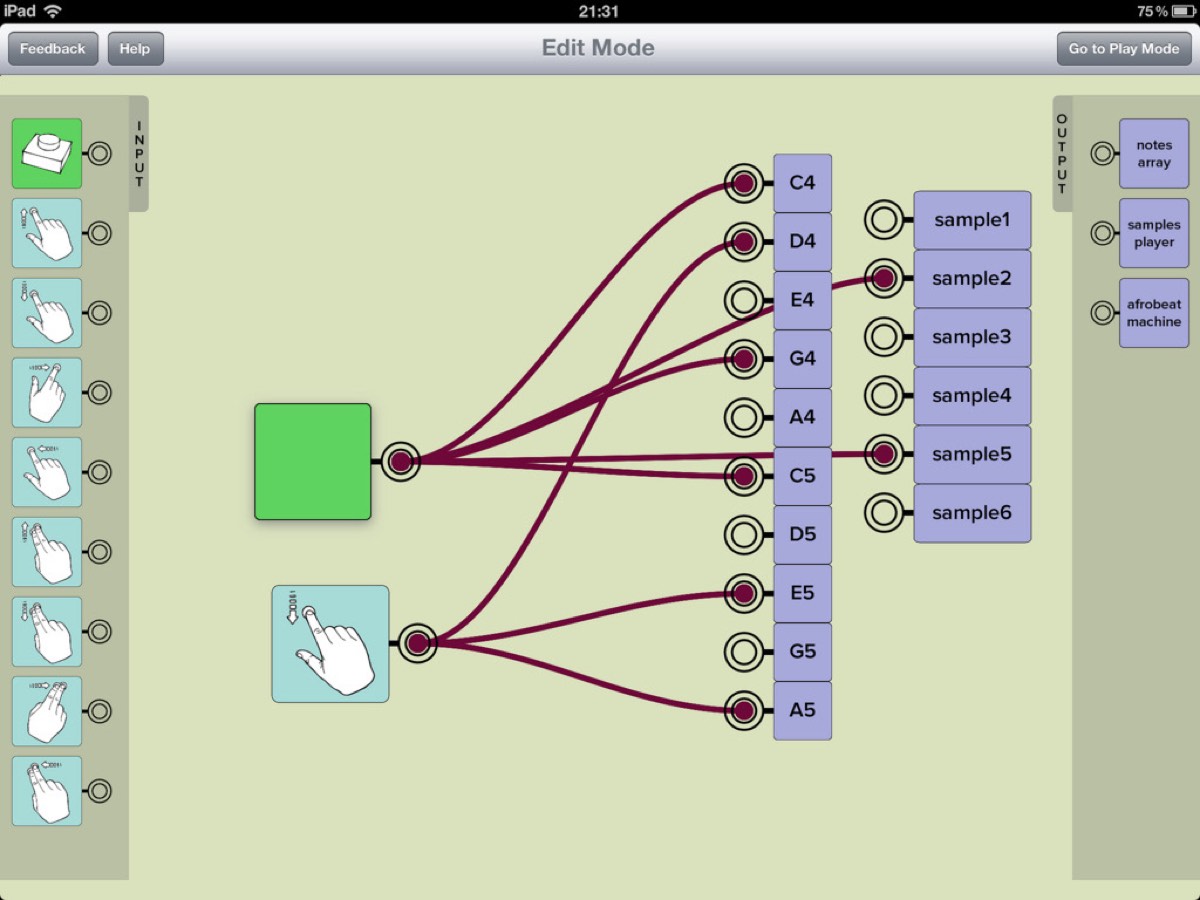
Sketchument · 2013
An environment for users without technical training to prototype digital instruments, with several input modes and integration with other technologies — developed under the same philosophy it proposes: from paper prototype to functional prototype, through videos, questionnaires, and interviews. It derives from Filipe Calegário's dissertation (2013), co-advised by Cabral. Sketchument: Empowering users to build DMIs through prototyping, with Calegário, Barbosa, Ramalho, and Gabriel Finch, Organised Sound 18(3), 2013 (doi.org/10.1017/S1355771813000290). The group's first journal article.
Illusio · 2013
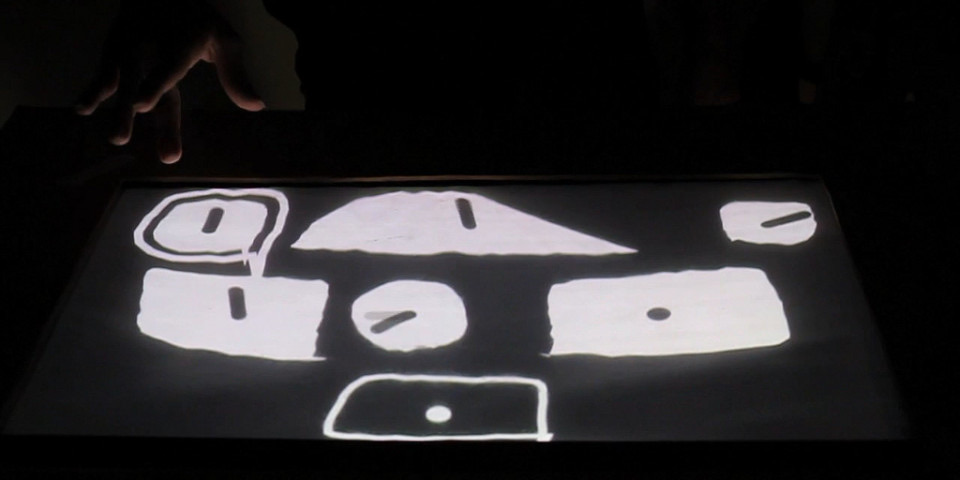
A multitouch instrument augmented with a device resembling a guitar pedal: the musician draws, links the strokes to live loops and organizes them into a musical tree — hierarchical live looping, in which an operation on a node affects all its children. Evaluated by both stakeholders, the performer and the audience. A Drawing-Based Digital Music Instrument, with Barbosa, Calegário, Teichrieb and Ramalho, NIME 2013, South Korea (zenodo.1178565); Portuguese version at SBCM 2013 (PDF in the proceedings). MusTIC × Voxar collaboration.
Design challenges · 2014
Challenges in Designing New Interfaces for Musical Expression, with Rodrigo Medeiros, Calegário and Ramalho (HCI International 2014, Crete; LNCS 8518, pp. 643–652; doi.org/10.1007/978-3-319-07668-3_62): virtuosity, cultural elements, context of use, success criteria and adoption strategy as issues specific to these artifacts.
Batebit · 2015
A year of design through cycles of inspiration, ideation and implementation with musicians from northeastern Brazil, resulting in two instruments. Designing DMIs for Popular Music in the Brazilian Northeast: Lessons Learned, with Barbosa, Calegário, João Tragtenberg, Ramalho and Marcelo Wanderley (McGill), NIME 2015, Baton Rouge (zenodo.1179007). This is the methodological origin of TumTá and Pisada.
Prototyping method and toolkit · 2017
A method for generating instrument ideas and a physical kit whose blocks are inspired by existing instruments, intended to reduce the time needed to reach a functional prototype; preliminary tests with musicians and designers. A Method and Toolkit for Digital Musical Instruments: Generating Ideas and Prototypes, with Calegário, Wanderley, Stéphane Huot (Inria Lille) and Ramalho, IEEE MultiMedia 24(1): 63–71, 2017 (doi.org/10.1109/MMUL.2017.18; hal-01467105). It is the most cited work on my CV across all databases (37 in Semantic Scholar, 26 in OpenAlex, 21 in Crossref, as of September 24, 2026), and the basis for Probatio, which Calegário developed later.
Two patents · 2017
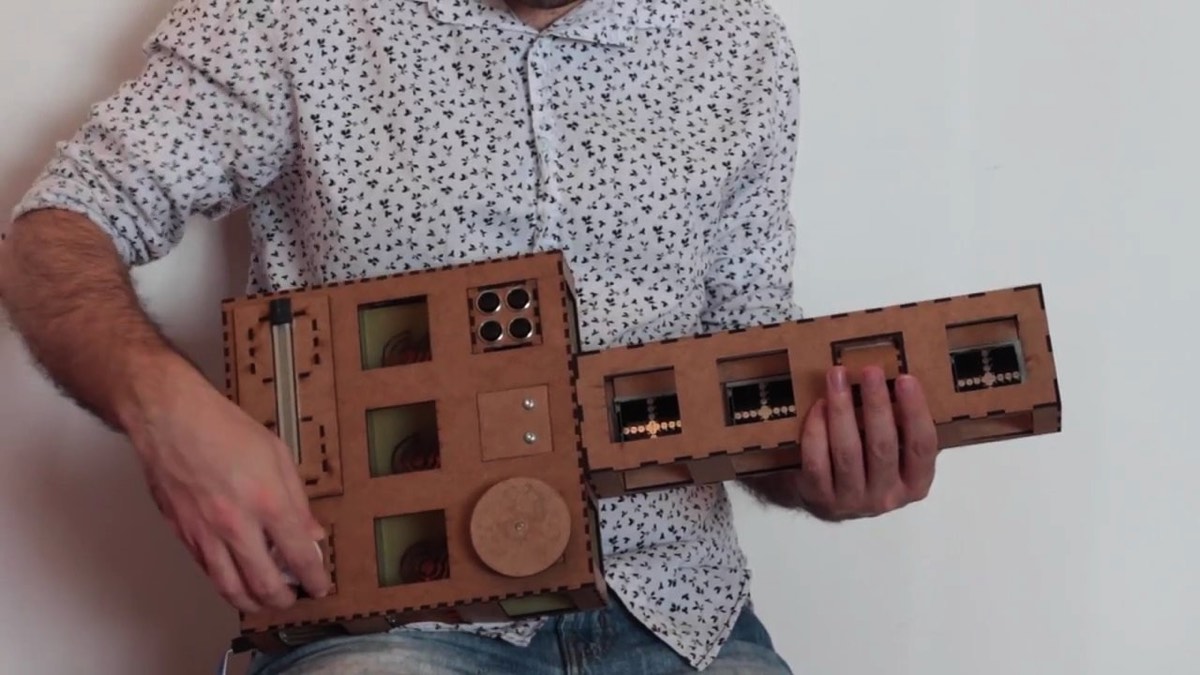
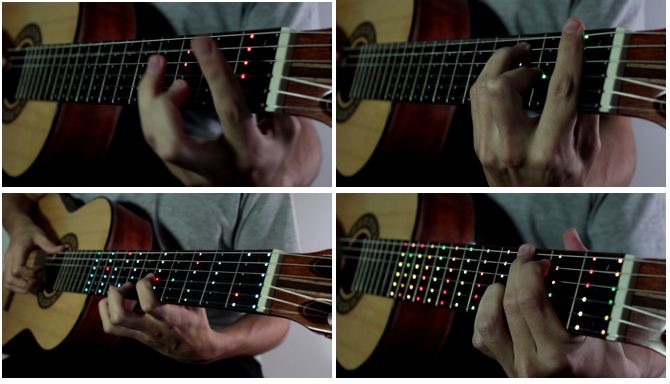
Filed with INPI on April 20, 2017, with João Nogueira Tragtenberg, Filipe Calegário and Eduardo Santos Silva; owned by Daccord Tecnologia: BR 10 2017 008307 1, a platform for visualizing and capturing musical performance events — LEDs on the instrument indicate the notes and chords to play, while sensors capture the performance and feed it into software that provides feedback —, and BR 10 2017 008296 2, a protocol for representing musical performance between software and platforms with input and output devices. The corresponding product is VioLED (2018), an acoustic guitar with LEDs.
TumTá and Pisada · 2019
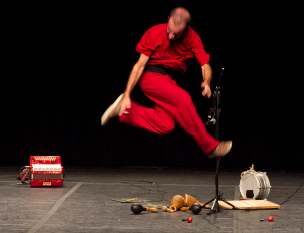
An insole that triggers sound samples through footsteps and a MIDI pedalboard designed for dancing, made between 2012 and 2017 for Helder Vasconcelos, a dancer and musician trained in the traditions of Cavalo Marinho and Maracatu Rural. Three prototyping phases — building blocks, handcrafting, digital fabrication. TumTá and Pisada: Two Foot-controlled Digital Dance and Music Instruments Inspired by Popular Brazilian Traditions, with Tragtenberg, Calegário and Ramalho, received the best paper award at the 17th SBCM (São João del-Rei, September 25–27, 2019; doi.org/10.5753/sbcm.2019.10426; CIn news article). Extended version in Per Musi 40, 2021 (doi.org/10.35699/2317-6377.2020.26151).
Digital dance and music instruments · 2019
The concept of DDMI — instruments in which music is intentionally generated by dance — bridges the digital instruments community, which knows little about bodily expressiveness, and the interactive dance systems community, which knows little about the instrumental relationship with music. It derives from João Tragtenberg's dissertation (2017), advised by Cabral. Towards the Concept of Digital Dance and Music Instruments, NIME 2019, Porto Alegre (zenodo.3672877). At the same NIME, AMIGO, an assistive instrument to engage, create, and learn music, with Isabela Corintha and Gilberto Bernardes (zenodo.3672909).
Enactivism and improvisation · 2021–2022
With Isabela Corintha, enactive musical cognition and the 4E model (embodied, embedded, extended, enactive) applied to improvisation with digital instruments in music education: Improvised Sound-Making within Musical Apprenticeship and Enactivism (NIME 2021; doi.org/10.21428/92fbeb44.56a01d33), SBCM 2021 and Revista Vórtex 10(1), 2022 (doi.org/10.33871/23179937.2022.10.1.7). This is the most cited recent work.
The 18th SBCM · 2021
Cabral coordinated with Filipe Calegário the 18th Brazilian Symposium on Computer Music (Simpósio Brasileiro de Computação Musical), organized by CIn and CESAR, entirely virtual (CIn portal, 10/21/2021). Ten works with his co-authorship are in the proceedings, with advisees and colleagues: CatalogToMakers, Mandrit, music visualizations, AMIS, Deejai, Wizard of Oz for artistic prototypes, personality and musical preference.
Eduardo Santos Silva's doctoral thesis · 2022
VioLED: augmented musical instrument + software as a service for public adherence and engagement in music learning, thesis nº 554 of PPGCC/UFPE, defended on 03/25/2022, with a committee of Calegário, Jean-Pierre Briot, Schiavoni, Neves and Figueiredo. Main advisor: Giordano Cabral. CIn portal.
03 · Digital musical instruments and MusTIC
Supervision in this research area
Master's: João Nogueira Tragtenberg (2017, primary supervisor), Michael Lopes Bastos (2019, CatalogToMakers), Gabriel Finch (2011, LiVES, UFRPE); co-supervision of Filipe Calegário (2013, Sketchument), Jerônimo Barbosa (2013, user experience evaluation), Eduardo Santos Silva (2015, sensor integration), Luca Bezerra Dias (2015, percussive phrases), Dídimo Vieira de Araújo Junior (2011, computer-assisted musicology) and Jaziel Vitalino Souza e Silva (2010, gestural interfaces for virtual percussion).
04 · Digital musical instruments and MusTIC
Service to the research community
Technical committee of SBCM in 2007, 2009 and 2011; chair of the technical committee and organizer of the proceedings of the 14th SBCM (2013, ISBN 978-85-7669-286-7); local organizer of the 12th SBCM (Recife, 2009) and co-editor of the proceedings (ISSN 2175-6759); technical committee of ICMC 2010; steering committee of SBC's Special Committee on Computer Music (Comissão Especial de Computação Musical) from September 2011 to August 2014. On 08/08/2017 UFPE granted the title of Doctor Honoris Causa to François Pachet, co-advisor of Cabral's doctoral thesis; the proposal originated at the Centro de Informática (CIn portal, 08/03/2017).
More at: mustic.cin.ufpe.br and in the Computação Musical course.