Strategy and business · 2000 → 2026
Boards, consulting and companies
Giordano Cabral works in organizational strategy on three fronts. On boards: eleven years on CESAR's Board of Directors, five of them as chairman (2020–2026); founding associate and board member of ARIES, Recife's long-term strategy agency; the technical-scientific council of Instituto Caldeira, in Porto Alegre; and Recife's Municipal Council for Science, Technology and Innovation. In consulting to companies, on strategy and the adoption of artificial intelligence. And in the companies he has founded since 2000, the first one built from the system developed in his master's thesis.
01 · Boards and governance
Boards of directors, advisory boards and public councils
board of directors · 2015–2026
CESARPrivate nonprofit innovation institute, founded in 1996 in Recife: 136 projects and 95 clients per year and 4,500 students at CESAR School (cesar.org.br, 2026). Vice-chairman of the Board of Directors from 2015 to 2020 and chairman from 2020 to 2026. During the period, the institute opened an operation in Aveiro, Portugal (2023).
founding associate and board member · 2018–
ARIESRecife Agency for Innovation and Strategy, a municipal Social Organization: it produced the Recife 500 Years Plan, the city's strategic plan through 2037, and is the delegated manager, in Recife, of FICOL 2 under the Recife–Nantes cooperation, €2.21 million through 2028 (AFD). One of the five founding associates; board member.
scientific and technical council · 2026–
Instituto CaldeiraInnovation hub in Porto Alegre, founded in 2019 by 42 companies from Rio Grande do Sul; 250 companies in the space and 512 connected in 2024 (Exame). He serves on the technical-scientific council, remotely.
alternate board member · 2024–
Municipal Council for CT&I of RecifeBody created by Law 18.974/2024 to propose and evaluate the city's innovation policies. Alternate board member, representing CESAR.
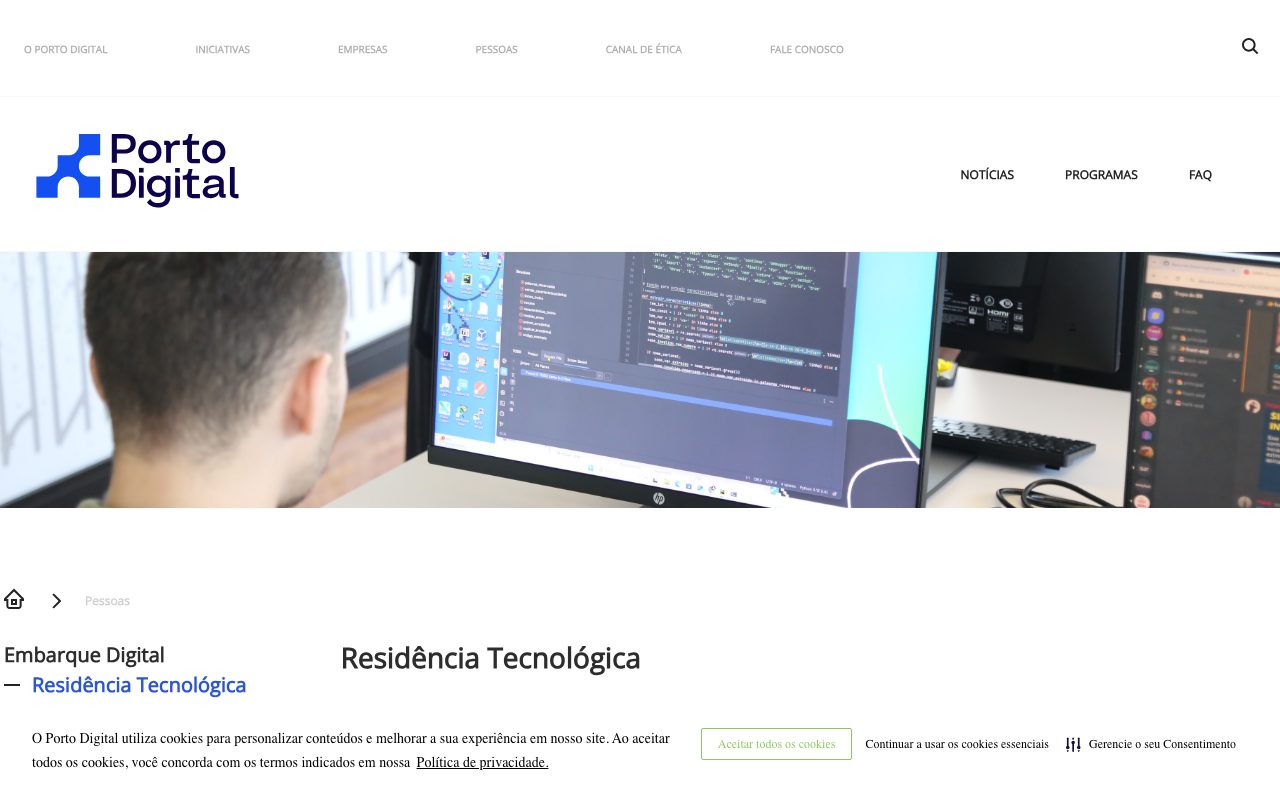
- Porto Digital: internationalization consultant for the Management Unit since 2019, on the Brazilian side of the Recife–Nantes cooperation, and pedagogical coordinator of the Residência Tecnológica (Technological Residency).
- Alumni CIn: president since 2022.
- Board member training: Fundação Dom Cabral (2015) and Instituto Brasileiro de Governança Corporativa (2019).
- Previously: CITi, CIn's junior enterprise, which he chaired in 1998; the advisory board of the European project PRAISE (2012–2014); UFRPE's Teaching, Research and Outreach Council (2012–2013).
02 · Consulting
Strategy and adoption of artificial intelligence
Giordano Cabral provides consulting to companies on strategy and business intelligence, with artificial intelligence as one of the elements of business transformation.
The FAROL instruments, the group he coordinates with Filipe Calegário at CIn/UFPE, measure how organizations and people work with agentic AI — six axes, five levels —, and are at farol-ia.org. At Porto Digital, the Residência Tecnológica, which he designed in 2019, puts student squads in real challenges proposed by more than a hundred companies.
Source: statement by Giordano Cabral, September 27, 2026; portodigital.org.
03 · Companies founded
Three, since 2000
founder · 2000–
Daccord Music SoftwareIt grew out of the system developed in his master's thesis, which generates guitar performance from chord charts, and was pre-incubated at Recife BEAT; products used in 116 countries, according to the company. First place in the Finep Innovation Award, Northeast stage, in 2009 and 2012. Partner at Daccord Tecnologia since 2018.
founder · 2007–2014
MusiGames StudioDaccord's games unit at Porto Digital, which brought the company's audio technology to games, for iPhone, iPad, Android, Symbian and Facebook: Drums Challenge led the iPad music games category in the United States in 2010.
co-founder · 2001–2017
Escribo Inovação para o AprendizadoEducational technology. Turma do Som, a music-education platform for the early school years, was a finalist for the 2015 Prêmio Jabuti. Director of technology and creation in 2010.
04 · Strategy and business2015–2026 (board); associate
CESAR — Centro de Estudos e Sistemas Avançados do Recife
Giordano Cabral served for eleven years on CESAR's Board of Directors: he was vice president from January 2015 to December 2020 and president from 2020 to 2026. He remains a member of the institute, one of about fifteen, and a member of the CESAR School Board.
Overview
A private nonprofit innovation institute, founded in 1996 in Recife by Silvio Meira, Ismar Kaufman, and Fábio Silva, professors at CIn/UFPE, and an anchor of Porto Digital; it describes itself as "a school, an experimentation laboratory, a research and development center, a venture builder". Units declared in 2026: Recife (headquarters), Manaus, São Paulo, Rio de Janeiro, Curitiba, and Florida, plus the operation in Aveiro, Portugal, announced on April 11, 2023. Figures published by the institutional website in 2026: 136 projects delivered per year, 95 clients per year, 20 segments, 1,000 startups supported over the past two years, and 4,500 active students at CESAR School — the teaching arm, with bachelor's degrees, technology degrees, specializations, two professional master's programs (the one in Software Engineering since 2007), and a professional doctorate (2019); "1,500+" staff according to Wikipedia (the institutional website does not report this). Governance: Assembly of Associates, Board of Directors, and Executive Board; as of September 2026 the Board is chaired by Sérgio Soares and the CEO is Karla Godoy. The institute turned 30 in 2026.
Sources: cesar.org.br/quem-somos and governance and transparency page, accessed on September 24, 2026; cesar.school/quem-somos and professional master's programs, September 24, 2026; Wikipedia, September 24, 2026; CESAR arrives in Portugal, April 11, 2023; 30 years, 2026.
Eleven years on the board
Vice-Chairmanship of the Board, from January 2015 to December 2020. Cabral appears with this title at the opening panel of the Encontro de Criadores de Música e Tecnologia, at Portomídia, on May 23, 2019, and in CESAR's "Inovação e Criatividade" series, on June 4, 2020 — there as a computational creativity researcher, discussing innovation from the concept then used by Geber Ramalho, chairman of the board at the time. The position has a dated public source: the article O imprevisível cenário pós-covid, from July 8, 2020, opens with the credit "By Giordano Cabral, Vice-Chairman of the CESAR Board".
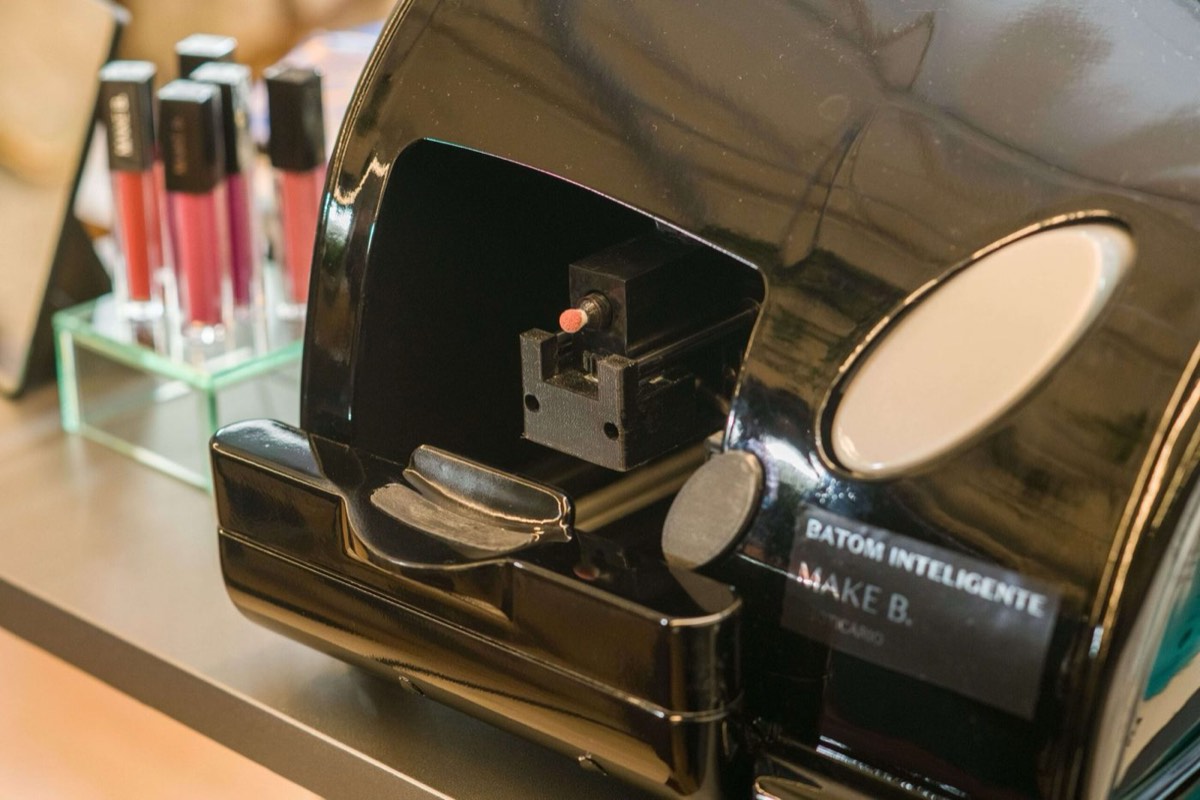
Chairmanship of the Board, 2020–2026. As chairman of the board, he signed the announcement of the operation in Portugal (April 11, 2023), the article on generative AI and the "Hello World" album (June 15, 2023), the presentation of the book "O futuro das organizações pela perspectiva Design-Driven" at HSM+ (December 12, 2023, with a foreword written by him), and the announcement of the Smart Lipstick (February 26, 2025). In December 2021 the board received the Women on Board certification.
The chairmanship can be verified outside the résumé. CESAR's governance page names him Chairman of the Board in eight Internet Archive captures between May 22, 2022 and June 17, 2026 (https://web.archive.org/web/20260617123559/https://www.cesar.org.br/governanca-e-transparencia), and on the page live on September 18, 2026 the chairman listed is already someone else, which matches the end of his term. The oldest public record predates these captures: on May 14, 2021 CESAR School published coverage of the institute's 25th anniversary naming the "chairman of the Administrative Board, Giordano Cabral" (cesar.school). At the other end of the timeline, the July 8, 2026 news about the new CEO already carries a statement from Sérgio Soares as chairman of the Board of Directors (cesar.org.br).
Duties of the position, according to the résumé: governance, multi-year plans, oversight of contracts with public agencies, leading the expansion and consolidation of CESAR School, and the internationalization effort — international fairs and programs.
The departure. Cabral submitted his resignation from the Board of Directors in January 2026, "for professional reasons". Cláudio Marinho, vice-chairman, took over on an interim basis; by April 2026 Sérgio Soares was already signing as chairman.
Training for the role: Board Member Training at Fundação Dom Cabral, in July 2015; Board Member Training at IBGC, from August to November 2019; and Executive Education in Business Management in the Digital Era, at CESAR School, in 2020–2021.
Sources: CESAR governance page and its eight snapshots in the Internet Archive between May 22, 2022 and June 17, 2026; news items on cesar.org.br dated May 22, 2019, June 4, 2020, December 17, 2021, April 11, 2023, June 15, 2023, July 5, 2023, December 12, 2023 and February 26, 2025; cesar.school, May 14, 2021; internal Board communications dated January 22, 2026, January 2026 and April 1, 2026.
Florescendo Talentos, with Stanford
Since January 2025 Cabral has been part of the team of the "Florescendo Talentos" Research Cooperation Agreement, between CESAR, the Lemann Center at Stanford Graduate School of Education, and the Pernambuco State Department of Education. Stanford Impact Labs publishes the "Preparing Brazil's Youth" investment (2025, Stage 1) and names him on the team as Chairman of the Board, CESAR School, alongside Eric Bettinger, of Stanford Graduate School of Education. His technical role on the project is described in the résumé, not in a public source, and is therefore not included here.
Before that, he was a Visiting Scholar at the Lemann Center in 2023–2024, with the affiliation "UFPE and CESAR". On July 28, 2026 he was interviewed for the "Memória Viva — 30 anos de CESAR" project.
Sources: Stanford Impact Labs; Visiting Scholar profile at the Lemann Center; cooperation agreement dated July 8, 2025.
Milestones with documented participation
| Date | Milestone |
|---|---|
| 23/05/2019 | Encontro de Criadores de Música e Tecnologia, Portomídia — opening panel as vice-chair of the board. |
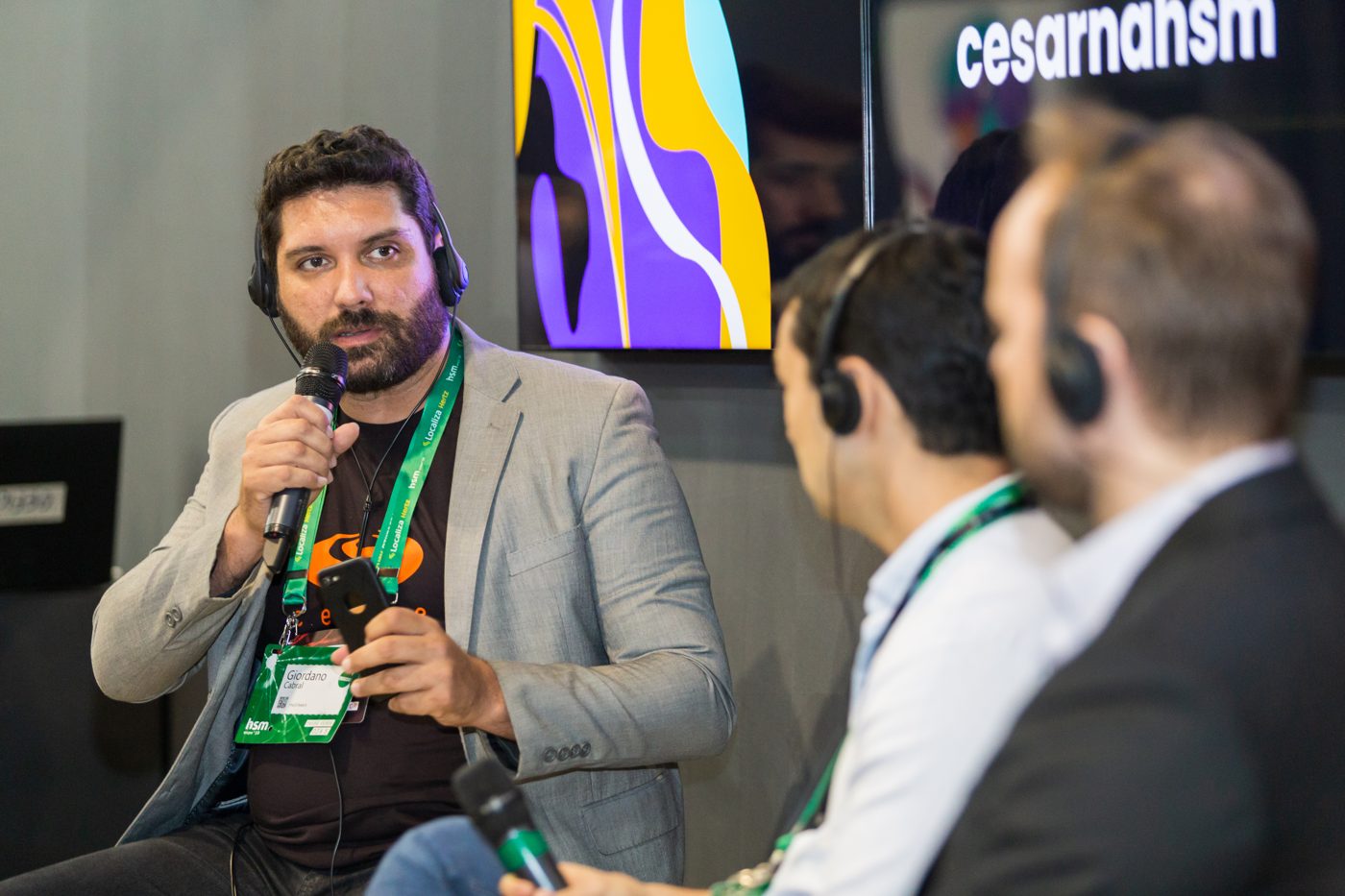
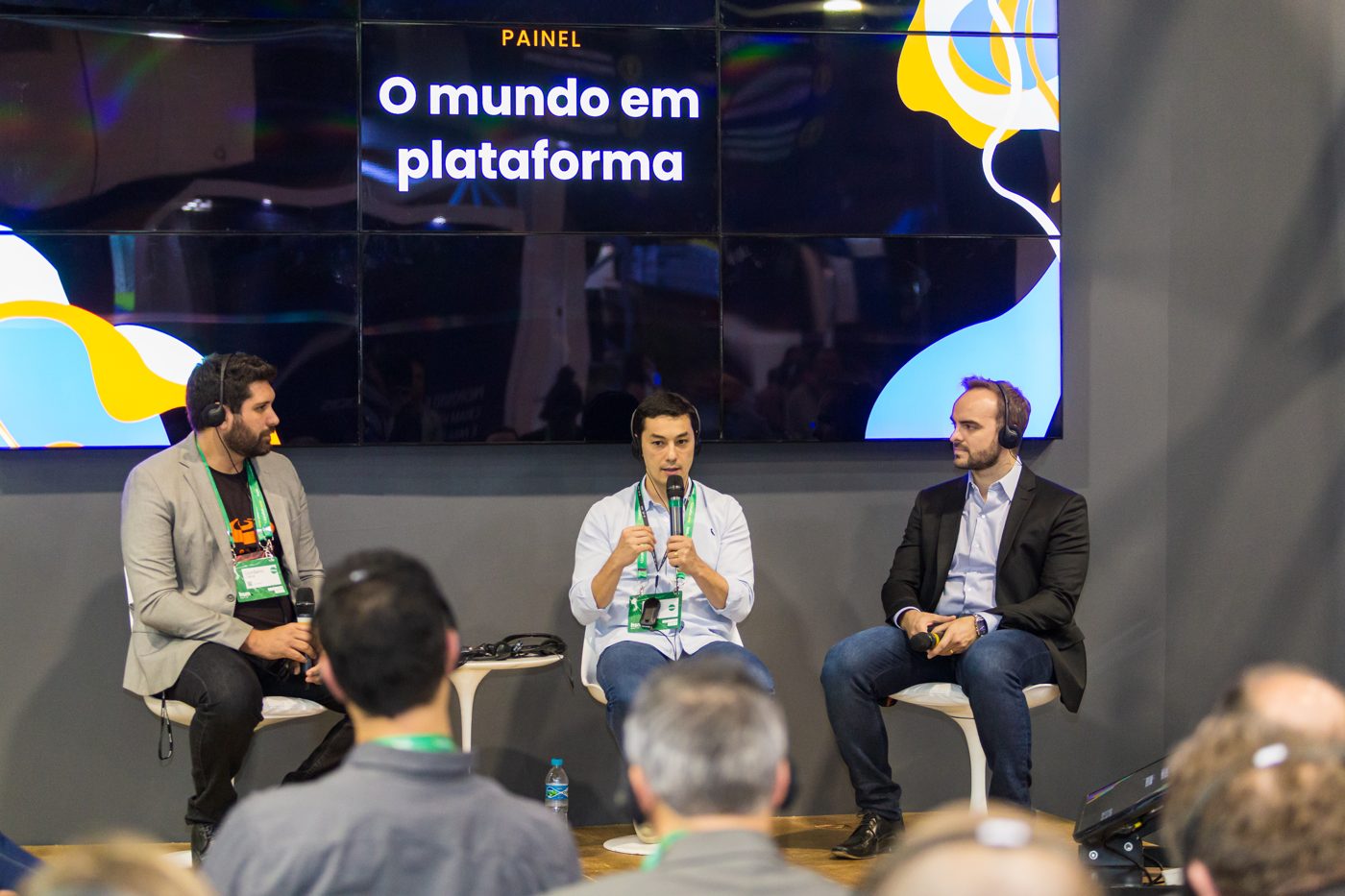
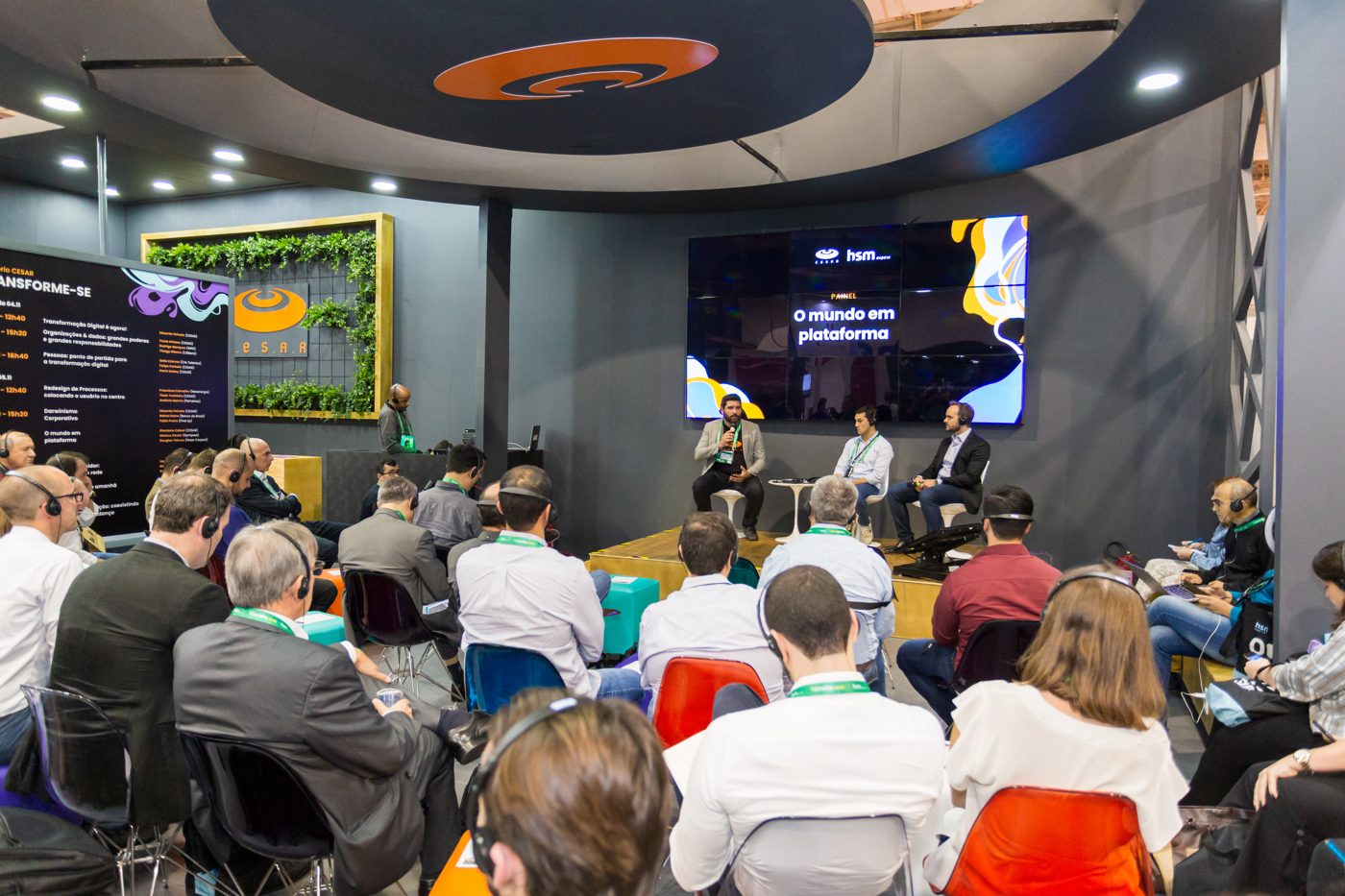
| 05/11/2019 | Panel "O mundo em plataforma" at HSM Expo 2019 (19th edition, theme "Ouse Aprender"), in São Paulo, from 3:40 p.m. to 4:40 p.m., as a speaker representing CESAR (program published on October 19, 2019). |
| 04/06/2020 | "Inovação e Criatividade" series (facilitated by CESAR) — commentary on creativity and innovation. |
| 19/07/2021 | First meeting of the CESAR Endowment Fund. |
| Dec 2021 | Women on Board certification for the Board of Directors. |
| 27/01/2023 | Draft bylaws for the European entity (CESAR Europa). |
| 11/04/2023 | Announcement of operations in Portugal: "Portugal has very close ties with Brazil, and we already have partners, clients and operations there". |
| 15/06/2023 | Article on generative AI: recounts following the preparation of "Daddy's Car", the first pop song co-written by AI, in 2016 with François Pachet and Jean-Pierre Briot, and advocates co-creation as a response to the risks of generative AI. |
| 12/12/2023 | HSM+ (Learning Village): preface and presentation of the book by more than 30 designers from CESAR and CESAR School. |
| 26/02/2025 | Smart Lipstick: a CESAR prototype for lipstick application using AI and computer vision, presented at CES 2025 and winner of the People's Choice at the SXSW Innovation Awards 2025; statement as chairman. |
| Jan/2026 | Resignation as chair and from the Board of Directors. |
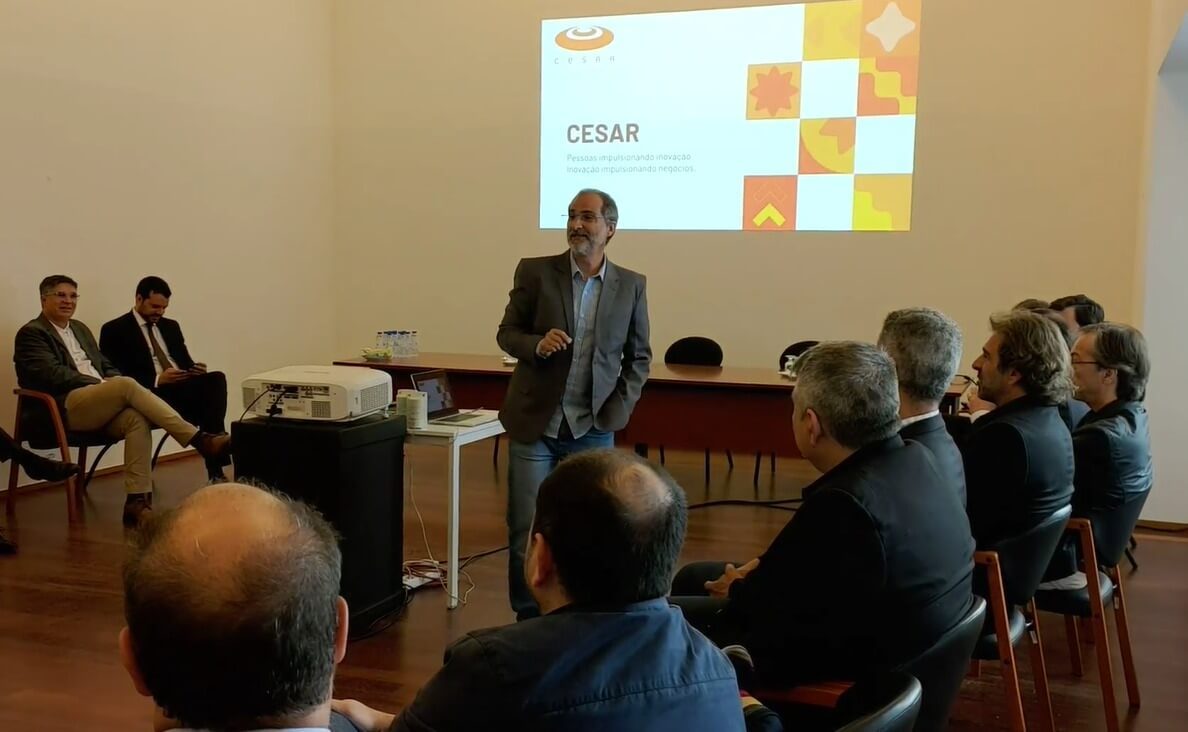
Signed texts and public appearances
- April 16, 2019 — panel discussion on artificial intelligence at CESAR School. At the launch of Hybris: inteligência artificial e a revanche do inconsciente, by ambassador and writer Alessandro Candeas, the opening was a panel on AI with the author, Giordano Cabral and Eduardo Peixoto, moderated by Geber Ramalho; free admission, at 5 p.m. This is the earliest public appearance by Cabral in a debate on AI and society found by the research. Announcement from April 12, 2019: cesar.school.
- July 8, 2020 — "O imprevisível cenário pós-covid". Article signed as vice-chairman of the Board. The argument: innovation is a change in the behavior of market agents, and the pandemic removed the obstacle of behaviors that already existed — online teaching, remote work, e-commerce, remote customer service. The text cites Alibaba, born during the SARS outbreak, and closes with "not only will we have to be adapted, but adaptable". cesar.org.br
- June 6, 2023 — "From 'Hello World' to an Array of A.I.-powered Design". The English version came out nine days before the Portuguese one and is the one that carries the direct quotes: the work with François Pachet (Sony CSL Paris) and Jean-Pierre Briot (Sorbonne), the preparation of "Daddy's Car" in 2016, the album "Hello World", creativity as a largely subjective matter, and the technical chain running from style transfer to prompt-based technologies. The text identifies him at times as Chairman of the Board, at times as Board Advisor. cesar.org.br
- January 17, 2025 — the smart lipstick prototype in the independent press. A month before CESAR's own announcement, Grit Daily published "Beauty Gets Brainy: How Brazilian Innovation is Disrupting the Global Cosmetics Industry", quoting Cabral, identified as Chairman of the Board for CESAR Innovation Hub: "This is just the beginning of how AI will transform beauty accessibility… The technology we've developed has potential uses far beyond lipstick application." gritdaily.com
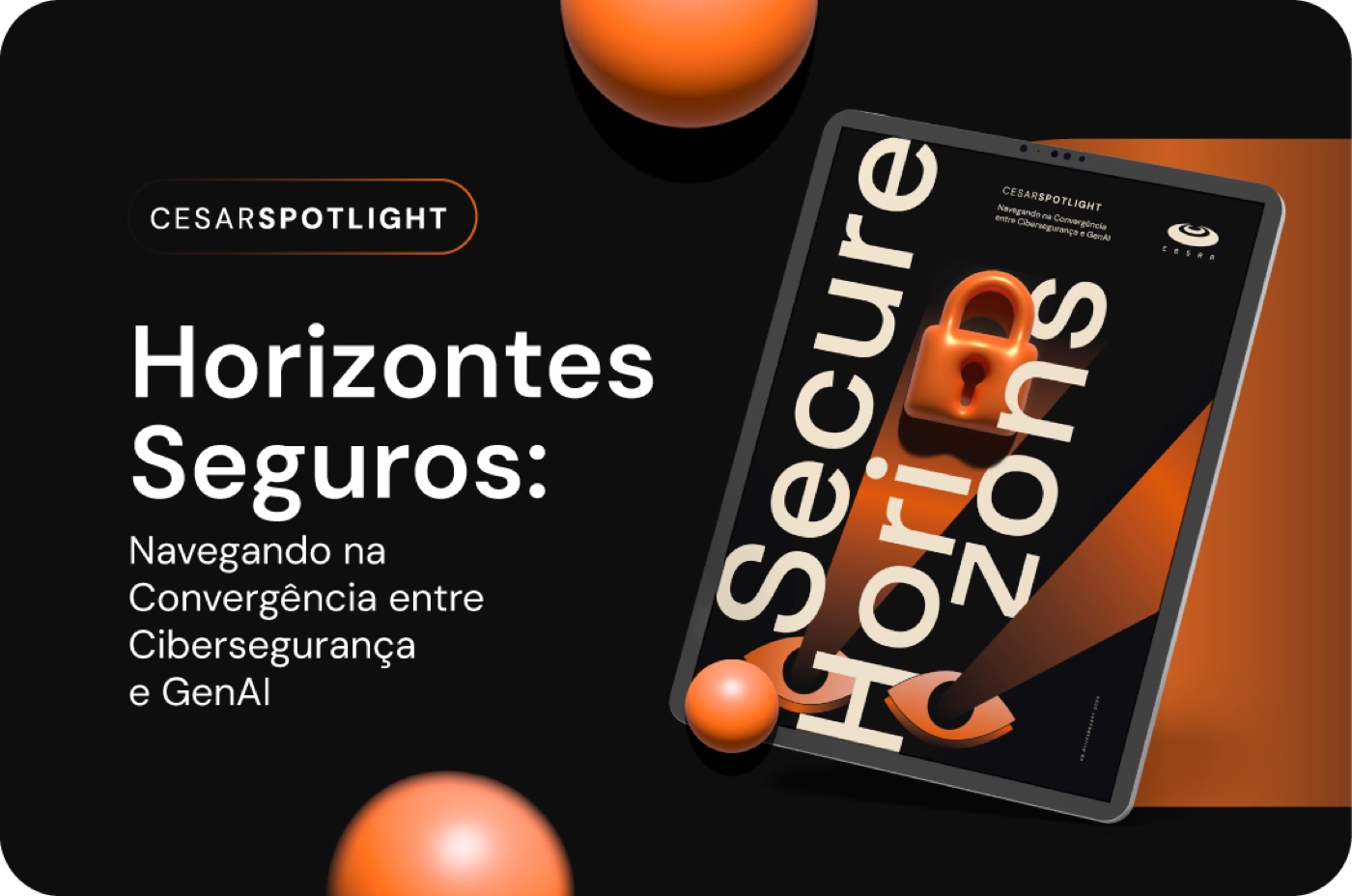
- February 14, 2025 — magazine "Horizontes Seguros: navegando na convergência entre Cibersegurança e IA". A CESAR publication in Portuguese and English. The launch article describes a conversation between Eduardo Peixoto, CEO, and Giordano Cabral, then Chairman of the Board, about the future of talent, education, and risk management, and quotes the statement: "Cybercriminals are using Artificial Intelligence for sophisticated attacks. Future cybersecurity professionals need to think like A.I., to understand its details." Launch announcement; the full publication is at
https://materiais.cesar.org.br/cesar-spotlight-secure-horizons-br. - July 2025 — Relatório de Impacto Socioambiental 2024 do CESAR, p. 28, "Mensagem do Presidente do Conselho", signed by Cabral. The argument: the institute's socio-environmental commitment was already in practice before the concept spread; the next step is to measure what is already being done and find the gaps; and the stated ambition is to act in sectors with a larger footprint, helping them adopt technology with a positive environmental effect. It is the only text he has signed on the subject (PDF).
Images from the archive
From the institutional Drive, retrieved on September 18, 2026.
05 · Strategy and business2018–
ARIES — Agência Recife para Inovação e Estratégia (Recife Agency for Innovation and Strategy)
Giordano Cabral is one of five founding partners of ARIES, together with Guilherme Cavalcanti, Sérgio Cavalcante, Fernando Holanda, and Fernando Braga. The agency was created for the long-term planning of Recife, focused on social inclusion, reducing inequality, and adapting a coastal city to climate change. The public registry gives the founding year as 2017 (CNPJ 29.036.430/0001-45); LinkedIn and his résumé give March 2018, and Lattes records "2017 – present, founding partner". Cabral has served on the Board of Directors since January 2021. The biographical note published by ARIES between 2021 and 2023 introduced him as follows: "Chairman of the Board of CESAR, founded companies such as Daccord Tecnologia and MusiGames Studio. Holds a PhD in artificial intelligence from Université Sorbonne (Paris), jointly with SONY Computer Science Lab Paris".
Overview
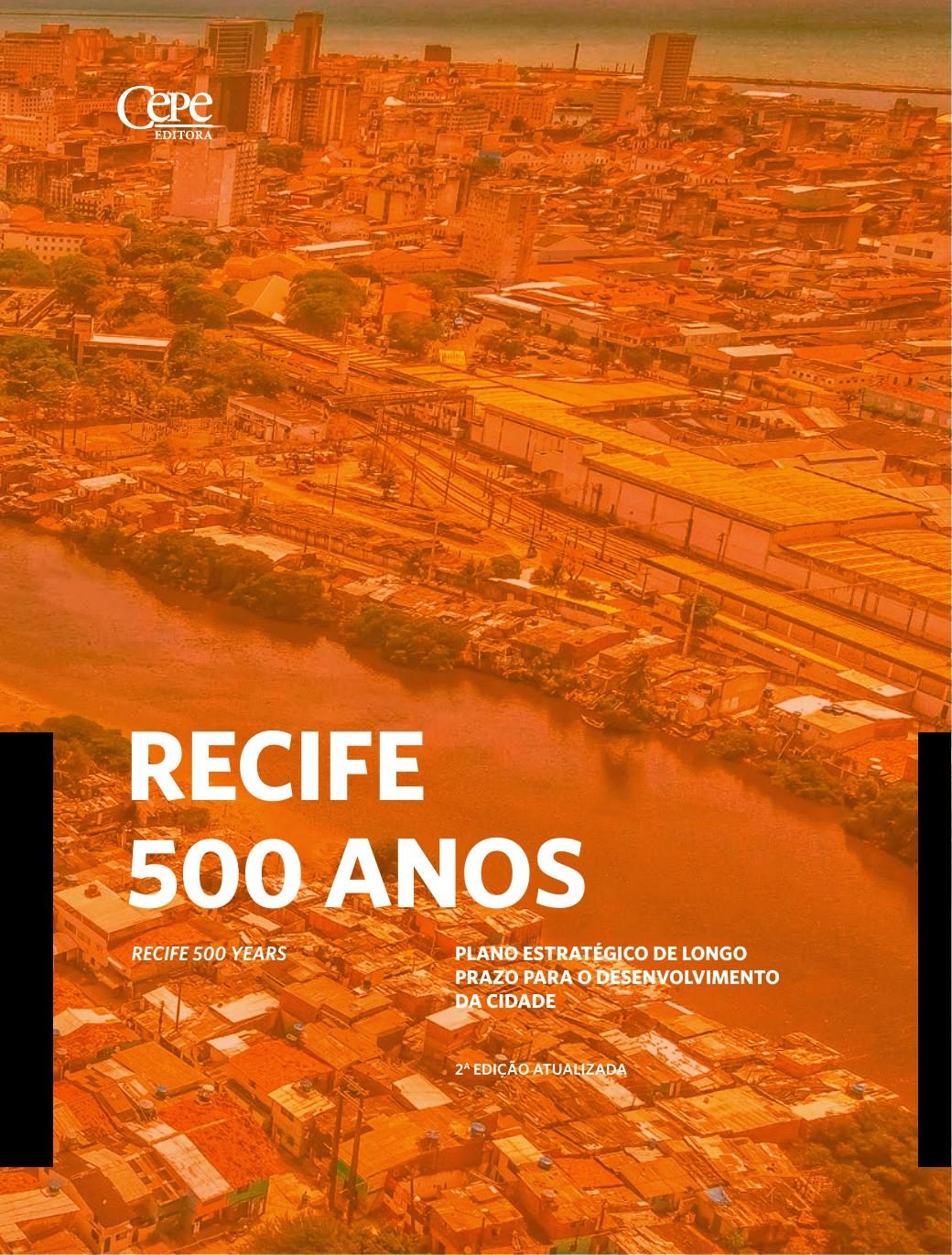
A private nonprofit association in Recife, registered in 2017 and operating since 2018, designated as a municipal Social Organization under Law 17.875/2013, with five founding members; the CGU describes it as created to "think strategically about Recife's long-term development, contributing to social inclusion and the reduction of inequalities". Its defining work is the Plano Recife 500 Anos, the city's strategic plan with a 2037 horizon, produced under a management agreement between the City Government and the Núcleo de Gestão do Porto Digital, implemented by ARIES and published in a bilingual second edition by Cepe in 2022, with a foreword by Mayor João Campos. In 2025, the agency began implementing two publicly funded projects: the inclusive adaptation of Macroárea Cajueiro (R$ 2,428,354.40, 2025–2027, according to Mapa das OSC) and, as the delegated manager on the Brazilian side, FICOL 2 of the Recife–Nantes cooperation, funded by the French Development Agency — €2,210,000 in total, €1,500,000 from AFD, from October 15, 2025 to December 15, 2028, with UFPE, Unicap, Porto Digital and CESAR as partners in Recife. Executive leadership: Marcos Baptista (2019–2023) and Mariana Silva Pontes (since July 14, 2023). Headquarters at Av. Marquês de Olinda, Bairro do Recife; CNPJ 29.036.430/0001-45.
Sources: Ipea's Map of Civil Society Organizations and CGU, Civil Society Organizations from A to Z, October 23, 2024, accessed September 24, 2026; AFD and Samoa Nantes, September 24, 2026; Plano Recife 500 Anos, 2nd edition (Cepe, 2022); Internet Archive snapshots of aries.org.br from 2021 to 2023 (home page, Founders' Assembly, Board of Directors, Executive Board).
Work at ARIES
On the Board of Directors, chaired by Francisco Cunha (TGI), he works on governance. Outside the board, his résumé lists the following responsibilities: institutional strategy and raising climate financing with UNEP and AFD; coordinating, through ARIES, the digital twin of downtown Recife with Arup — a territorial catalog, historical series, and geographic layers to support public decision-making; and the filtering-gardens initiative. He was called to the 1st Board Meeting of 2026, on July 8, 2026, and co-signed with Fernando Holanda the minutes of the Ordinary General Assembly of June 25, 2026.
In international cooperation, he joined the delegation of the London–Paris–Nantes mission from May 24–30, 2026, with meetings at Arup, at Catapult, and at Central Saint Martins, and an agenda with UNEP, and moderated the roundtable "Geopolitics of the Digital" in Nantes, on the 27th and 28th.
In 2026 he led an AI training workshop for the team and took part in drafting the agency's AI use policy. ARIES was the pilot site for the FAROL instruments, the group Cabral coordinates at CIn/UFPE, and hosted, together with CESAR School, the climate resilience hackathon on July 10.
Sources: aries.org.br (board and executive board pages, 2021–2023 snapshots); ARIES LinkedIn page; September 2026 CV; internal agency records (meeting notices and minutes from 2026).
Milestones
| Date | Milestone |
|---|---|
| 2017–2018 | Founding (registered in 2017; active from 2018). |
| 2019 | Marcos Baptista becomes executive president. |
| 2021 | Institutional site with governance, a biweekly newsletter, and the "Colabore" channel for the Plano Recife 500 Anos; Giordano Cabral joins the Board of Directors. |
| 2022 | 2nd edition of Plano Recife 500 Anos (Cepe), bilingual, 368 pages. |
| 2023 | Mariana Pontes, project director, becomes president (record dated July 14, 2023). |
| 2026 | London–Paris–Nantes mission (May); UN report cites urban projects in Recife (March), and the constructed wetland becomes a UN-published case study (July); Ordinary General Assembly on June 25; 1st Board Meeting on July 8; hackathon with CESAR School on July 10; planned participation in Rec'n'Play 2026 ("Cities in Transition", November). |
06 · Strategy and business2019–
Porto Digital / NGPD — Residência Tecnológica, Embarque Digital, and internationalization
Overview
Technology park in Recife, established in July 2000 as a public policy initiative of the State of Pernambuco, with an initial investment of R$ 33 million, and managed by Núcleo de Gestão do Porto Digital (NGPD) — a private nonprofit association established in December 2000 (CNPJ 04.203.075/0001-20), designated as a Social Organization under State Decree No. 23.212/2001 pursuant to Law No. 11.743/2000, which operates under a management contract with the State Government; president Pierre Lucena, since October 30, 2018. An area of 171 hectares in Bairro do Recife and Recife Antigo, with more than 230,000 m² of restored historic properties; operations also in Caruaru, Petrolina, Brasília, Sergipe and Aveiro (Portugal). Results for 2025, released on March 27, 2026: 541 companies, 24,079 employees and revenue of R$ 7.4 billion, up 19%; in 2025, formal ICT employment in Recife grew by 15.8%, the highest increase among state capitals. Two training programs are relevant to this page: Residência Tecnológica, a course integrated into technology degree programs at six partner institutions, involving more than 100 companies; and Embarque Digital, a scholarship program run by the Recife City Government for people who completed their entire secondary education in public schools, launched in 2021 — R$ 30 million and 2,000 places planned through 2024; 3,043 entrants and 1,130 graduates as of September 16, 2026.
Sources: history and overview on portodigital.org; 2025 results, March 27, 2026; Residência Tecnológica and Embarque Digital; Ipea's Map of Civil Society Organizations (NGPD); Decree 23.212/2001; Recife City Government, September 16, 2026. All accessed September 24, 2026.
Origin of the Residency
In 2019, Porto Digital had more than a thousand open positions in 355 companies going unfilled. The program aimed at this problem, Empregaço, had enrolled more than 700 IT graduates and employed less than 5% of them.
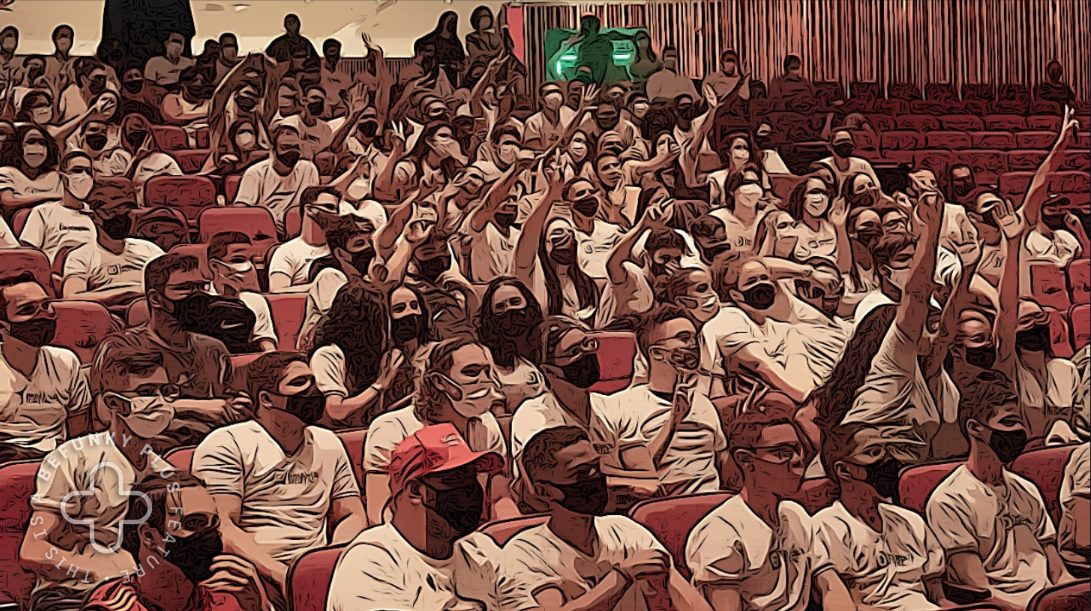
Giordano Cabral was invited to redesign the model. Based on consultations with institutions, students, and companies, he designed the Residência em Desenvolvimento de Software (Software Development Residency): cycles with a name and a deadline — kick-off, rise up, grow up, take off —, each closed by a demo day, squads of students working on real challenges proposed by companies, and market mentors working alongside the professors. In the program's first cohort, employability reached close to 100%.
In 2020 the model was adopted as public policy by the Recife City Hall together with Porto Digital: Embarque Digital (Digital Boarding), scholarships for public school students in two-and-a-half-year technology degree programs. The article published by Cabral in 2024 gathers the results accumulated by the program: the supply of IT courses in the city doubled, there were 2,000 scholarships, more than half of the scholarship recipients had no family member who had reached higher education, dropout fell by half, 51.8% of the inaugural class was employed before graduating, and the ecosystem came to have more Black, mixed-race, and women participants than it had before.
Sources: "Embarque Digital", article by Giordano Cabral on LinkedIn, 01/10/2024.
Work at Porto Digital
Cabral has coordinated the Residência Profissional Tecnológica without interruption since September 30, 2019, with PD&I (R&D&I) grants from Softex Recife in the 2022–2023, 2024, and 2025 cycles, and a monthly report. The role has a dated public source: two news items from the CIn-UFPE portal from September 2021 describe him as "professor at CIn, chair of the CESAR board, and coordinator of the Porto Digital Software Residency" (CIn portal, 09/01/2021). The program's name differs between sources — the CIn portal says "Residência de Software"; the Porto Digital website and the NGPD statement say "Residência Profissional Tecnológica" —, and both spellings are recorded here.
He conceived and provides technical coordination for the platforms that run the Residência and Embarque Digital: enrollment, selection, monitoring, accountability, and the interface with companies and government, operating in Recife and in Aracaju. In 2026 the in-house management system went into production, and Cabral co-wrote with Marcela Valença a manual for replicating the program in other cities.
He has also been an internationalization consultant for the NGPD since September 2019. He designed the park's internationalization strategy and leads, on the Brazilian side, the Recife–Nantes cooperation with ADN Ouest and Nantes Métropole — thematic working groups and the Strategic Partners Council —, and coordinated GT3 in 2026. In April 2026 he served on the pitch panel of Cais do Porto, the park's internationalization program.
At Rec'n'Play, he was curator of the technology track of the 4th edition, in 2022, with Monica Bouqvar and Henrique Foresti; panelist at Rec'n'Play Capítulo Saúde (Health Chapter), on August 27 and 28, 2026, on the panel "How to learn, teach, and evaluate in the age of AI"; and thematic expert for the curatorial review of the 2026 open call.
The program is also a subject of study: Cabral is a co-author of "Mercado de trabalho em TI: análise de um experimento de aproximação entre academia e indústria no Porto Digital" (VALENÇA, DINIZ, PINCOVSKY, FRANÇA and CABRAL, WASHES 2023, SBC), and the Residência was the subject of his research as a Visiting Scholar at Stanford University, in 2023 and 2024.
Sources: statement by NGPD's Superintendent of Innovation and Training, Marcela Valença, dated July 17, 2024, and Softex Recife grant agreements from 2022 to 2025, attached to the September 2026 CV; CIn portal, September 1, 2021; Porto Digital news article about Rec'n'Play 2022; VALENÇA et al., WASHES 2023 (SBC).
How far the two programs have come
- Residência Tecnológica. More than 100 partner companies; cohorts in Recife, Aracaju, and Brasília; partner institutions CESAR School, FICR, Faculdade Senac, Unicap, Unit (Recife and Aracaju), and Universidade Católica de Brasília, according to the Porto Digital website. In the second half of 2025, there were more than 40 companies and more than 70 mentoring sessions for around 2,300 students in Recife, out of a total of 3,700 across the three cities (Jornal Digital, January 20, 2026). The 2024.1 Embarque Digital cohort produced 185 graduates, around 70% of whom were employed (Residência's LinkedIn page).
- Embarque Digital. Scholarships from the Recife City Government in partnership with Porto Digital for Recife residents who completed their entire secondary education in public schools, at six institutions: CESAR School, FICR, Senac, Unicap, Uninassau and Unit.
- 2026. Cabral administered the "Meu Mapa de IA" census to students in September. Porto Digital published a manifesto on teaching in the age of AI, presented by him at Unicap on August 3 and at UFPE's opening lecture on August 13.
Sources: portodigital.org, Residência Tecnológica and Embarque Digital pages accessed on September 17, 2026; Jornal Digital (Recife), January 20, 2026; Residência Tecnológica's LinkedIn page.
Milestones
| Date | Milestone |
|---|---|
| 2018 | Mission to Nantes (FICOL), at the start of the cooperation. |
| Sep/2019 | Start of educational coordination for Residência and internationalization consultancy. |
| 2020 | Embarque Digital becomes municipal public policy. |
| Sep/2022 | Curation of the technology track at Rec'n'Play. |
| 2023 | Paper at WASHES 2023; research on the program at Stanford. |
| 10/01/2024 | Article "Embarque Digital" on LinkedIn. |
| 2025 | Softex fellowship ended on September 30, 2025 (Residência in Aracaju); internationalization panels at Rec'n'Play (October 17, 2025). |
| 2026 | Cais do Porto judging panel (April 8–10); third meeting of the Recife–Nantes Strategic Council (August 13); Residência management system in production (July 21); Rec'n'Play Saúde (August 27–28); curation of Rec'n'Play 2026 (September). |
07 · Strategy and business2026–
Instituto Caldeira
Giordano Cabral has been a member of the Instituto Caldeira's Technical-Scientific Council since 2026, created that year, with quarterly meetings which he attends remotely, from Recife. He has also been an associate of the institute since 2026 and, in September, contributed to the thesis of "Caldeira for Startups", a pre-incubation program for young people aged 16 to 24.
The institute does not publish the composition of this council. The information above comes from Cabral's résumé and from correspondence, not from a verifiable public source.

Overview
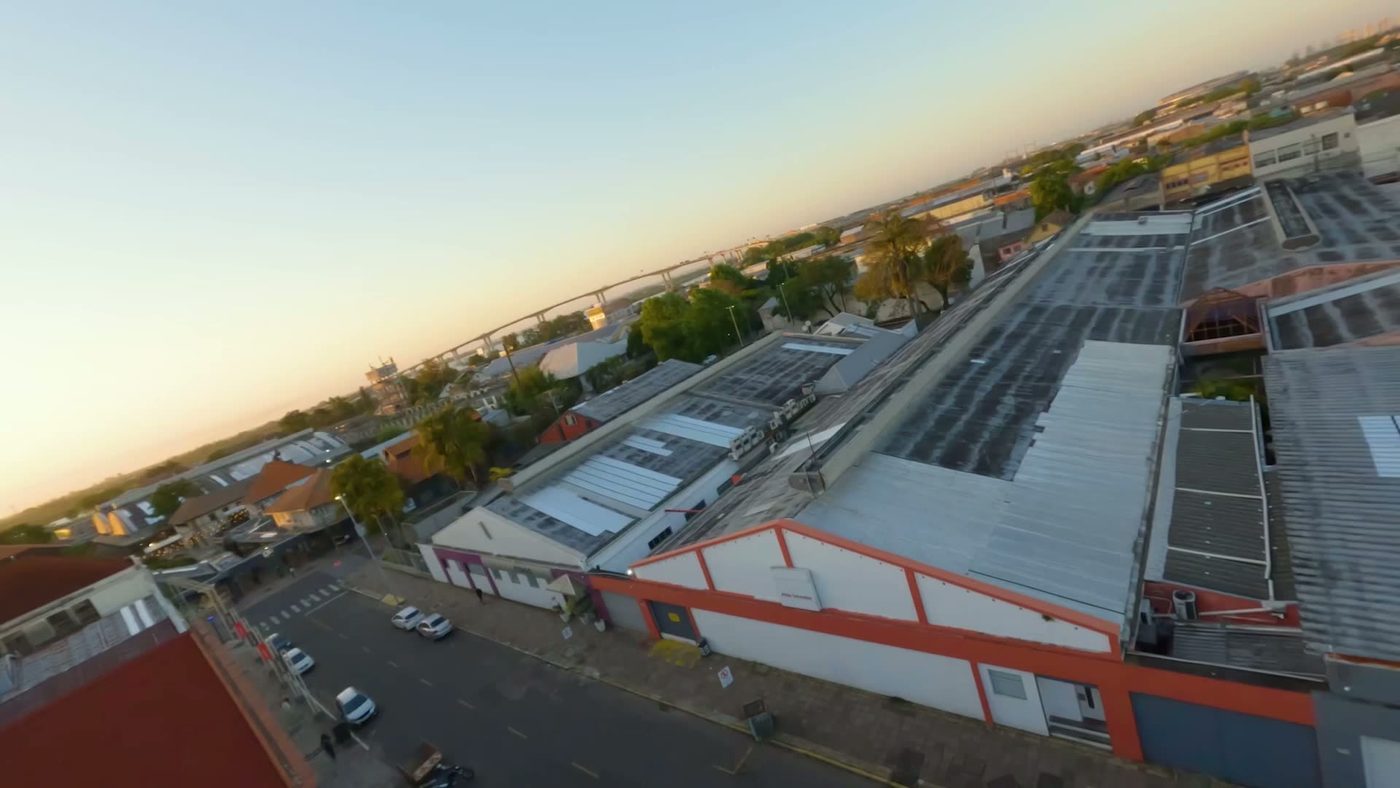
An innovation hub in Porto Alegre, a private nonprofit association (CNPJ 35.334.501/0001-99), founded in 2019 by a group of large companies from Rio Grande do Sul — 42 according to Wikipedia and Exame, 43 according to its own website — including Banrisul, Sicredi, Renner, Gerdau, Panvel and Agibank. Since 2020, it has occupied the former Renner factory in the Navegantes neighborhood (22,000 m²), and in March 2026 it opened a second building in the 4º Distrito (33,000 m²). Figures vary by source and date: 250 companies on site and 512 connected, "around 15% of Rio Grande do Sul's GDP directly linked" (Exame, April 29, 2024); 700 startups, more than 560 member companies, more than 120,000 young people from public schools and 55,000 m² (website, September 17, 2026). President: Pedro Freitas Valério, since October 9, 2019.
Sources: Ipea's Map of Civil Society Organizations, Wikipedia and Exame, April 29, 2024, accessed September 24, 2026; institutocaldeira.org.br, homepage and "About us", accessed September 17, 2026.
08 · Strategy and business1997–
Other organizations: Alumni CIn, CMCTI Recife, SBC/CECM, CITi, board member training
Overview
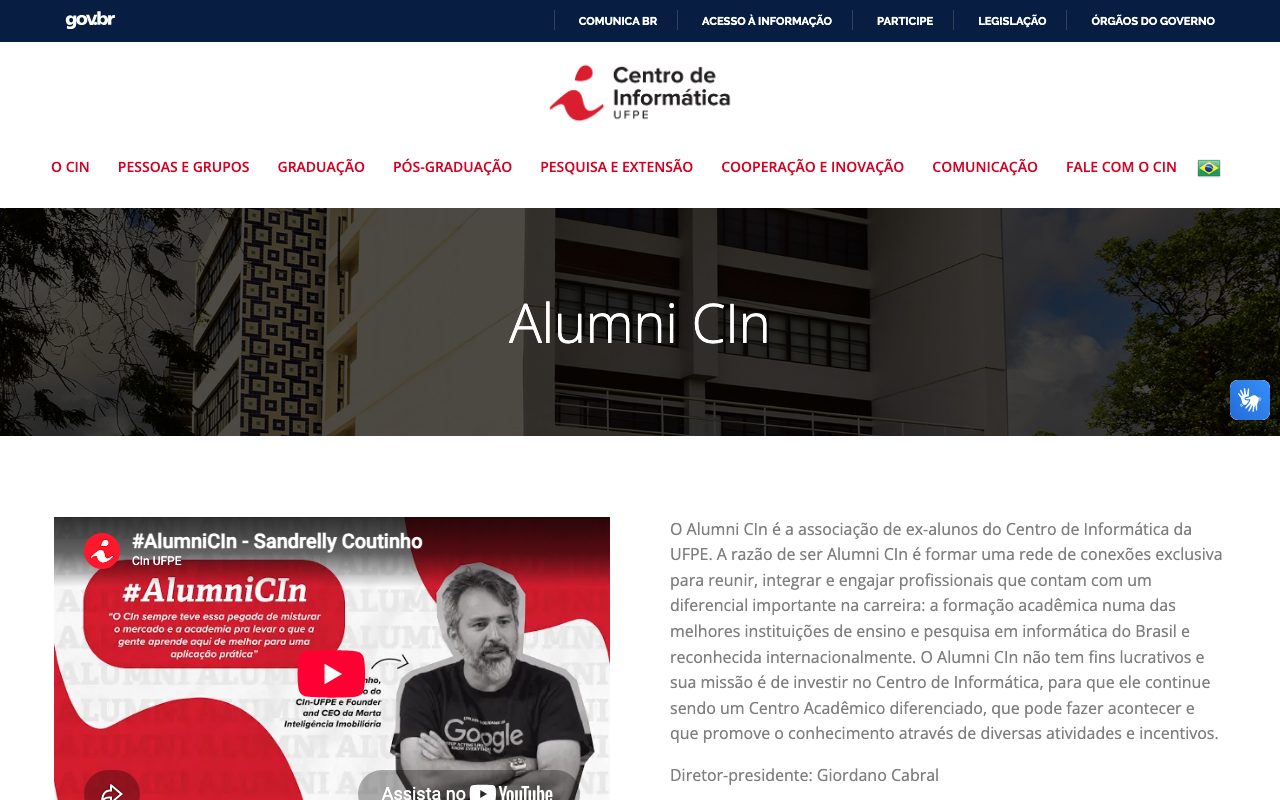
Alumni CIn: a nonprofit association of alumni of UFPE's Center for Informatics, created to "bring together, connect and engage" the Center's graduates and invest in its academic activities. Conselho Municipal de Ciência, Tecnologia e Inovação do Recife (Recife Municipal Council for Science, Technology and Innovation): a collegiate body established by Municipal Law No. 18,974 (Official Gazette of November 14, 2024), affiliated with the Secretariat for Science, Technology and Innovation, to formulate, propose and evaluate innovation policies, propose the Municipal Science, Technology & Innovation Plan and structure the Recife Innovation Award. CECM/SBC: a committee of the Sociedade Brasileira de Computação (Brazilian Computer Society) that "promotes scientific, technological and artistic research" in music computing and organizes the biennial Simpósio Brasileiro de Computação Musical (Brazilian Symposium on Computer Music); the coordinator, deputy coordinator and steering committee are elected every two years. CITi: a student-run junior enterprise at CIn/UFPE, founded by undergraduate students on March 17, 1997, that provides IT consulting, develops software and websites and offers courses.
Sources: Alumni CIn page and news item dated October 19, 2022, CIn/UFPE portal; Recife City Government, November 19, 2024; CECM on the SBC website; CITi on the CIn portal. All accessed September 24, 2026, except the City Government page (September 17, 2026; the server refused the connection on September 24).
Alumni CIn — the alumni association of the Center for Informatics
At the Ordinary General Assembly on October 14, 2022, Giordano Cabral was elected and sworn in as director-president of Alumni CIn for the 2022–2025 term, succeeding Hermano Perrelli de Moura. The board includes Adeline Silva Schaefer in Communications and Marketing and Rafael Toscano in Planning, Administration and Finance, and a ten-member administrative council. Cabral remains in the position in 2026.
The association's purpose is to maintain alumni ties with the Center and support their academic activities. The management plan organizes it into four tracks — Continuing Education; Career and Mentoring; Entrepreneurship, Partnerships and Funding; People, Community and Networking —, with decentralized governance and open accounts.
Sources: news item on the CIn/UFPE portal, October 19, 2022; Alumni CIn page, which lists "President: Giordano Cabral"; CV dated September 2026, which gives the date as November 2022.
Recife Municipal Council for Science, Technology and Innovation
Cabral is an alternate board member, representing CESAR, by nomination accepted by the secretariat in October 2024. On March 16, 2026, he took part, as a board member, in the validation of the guidelines of the Recife Municipal Artificial Intelligence Strategy, launched at Porto Digital.
Sources: Recife City Government, November 19, 2024; CV dated September 2026.
SBC — Comissão Especial de Computação Musical (Special Committee on Computer Music)
Cabral was a member of the steering committee from 2011 to 2014, listed in the SBCM 2013 proceedings booklet by UFRPE, and coordinated the committee.
The period of the coordination differs between sources, and is recorded as follows: the 2019 committee minutes place the coordination in the 2017–2019 term; the SBC institutional page lists "Giordano Ribeiro Eulalio Cabral (UFPE) — Coordenador" for the 2022–2023 term, with Filipe Calegario as vice, and also lists him on the steering committee in 2015–2017, by UFRPE, and in 2021–2022. The SBC page does not record a 2017–2019 term. The Lemann Center profile says "president of the CECM", with no period given.
In event organization: he co-organized the 12th SBCM, in 2009 — the proceedings list him as Local Organization Chair, with Geber Ramalho, and on the Technical Papers Program Committee, in both cases with the affiliation "D'Accord Music Software" rather than the university, which helps date the company's transition into academia (proceedings). He was chair of the technical committee of SBCM 2013, a member of the committees in 2007, 2009, 2011, and of ICMC 2010, and general coordinator of the 18th SBCM, in 2021, with Filipe Calegario, held by CIn/UFPE with CESAR.
Sources: CECM page on the SBC website; proceedings of the 12th SBCM (2009); committee minutes from 2019; Lattes, Escavador mirror dated March 3, 2026; Lemann Center profile.
CITi — the junior enterprise at CIn/UFPE
The Centro Integrado de Tecnologia da Informação (Integrated Information Technology Center) was founded on March 17, 1997, by undergraduate students, among them Giordano Cabral. He was director of courses in 1997, president-director in 1998, and board member between 1999 and 2000, according to Lattes; LinkedIn records "Board Member, 1998–1999".
Sources: CITi page on the CIn/UFPE portal; Lattes; LinkedIn (December 2022 export).
Board member training
Board member training courses: Formação de Conselheiros (Board Member Training) at Fundação Dom Cabral, in July 2015; Formação de Conselheiros at IBGC, from August to November 2019; and Educação Executiva em Gestão de Negócios na Era Digital (Executive Education in Business Management in the Digital Age), at CESAR School, in 2020–2021.
Other activities
- Núcleo de Gestão do Porto Digital (Porto Digital Management Nucleus): besides what is on the Porto Digital page, he takes part in NGPD governance as an associate (2026).
- Voxar Labs (CIn/UFPE): researcher since October 2021.
- 16th National Science and Technology Week (2019): he proposed the project to CNPq in partnership with the Recife City Hall, the Olinda City Hall, and Porto Digital; the opening was held in the CIn amphitheater on October 21, 2019 (CIn portal).
- In development (2025–2026): an organizational maturity platform, still taking shape.
Biographical notes in circulation mention "five technology-based startups". The ones this section documents are three: Daccord Music Software, MusiGames Studio, and Escribo. The other two have not been identified in public sources.
Images from the archive
From the institutional Drive, retrieved on September 18, 2026.

09 · Strategy and business2000–
Daccord Music Software → Daccord Tecnologia
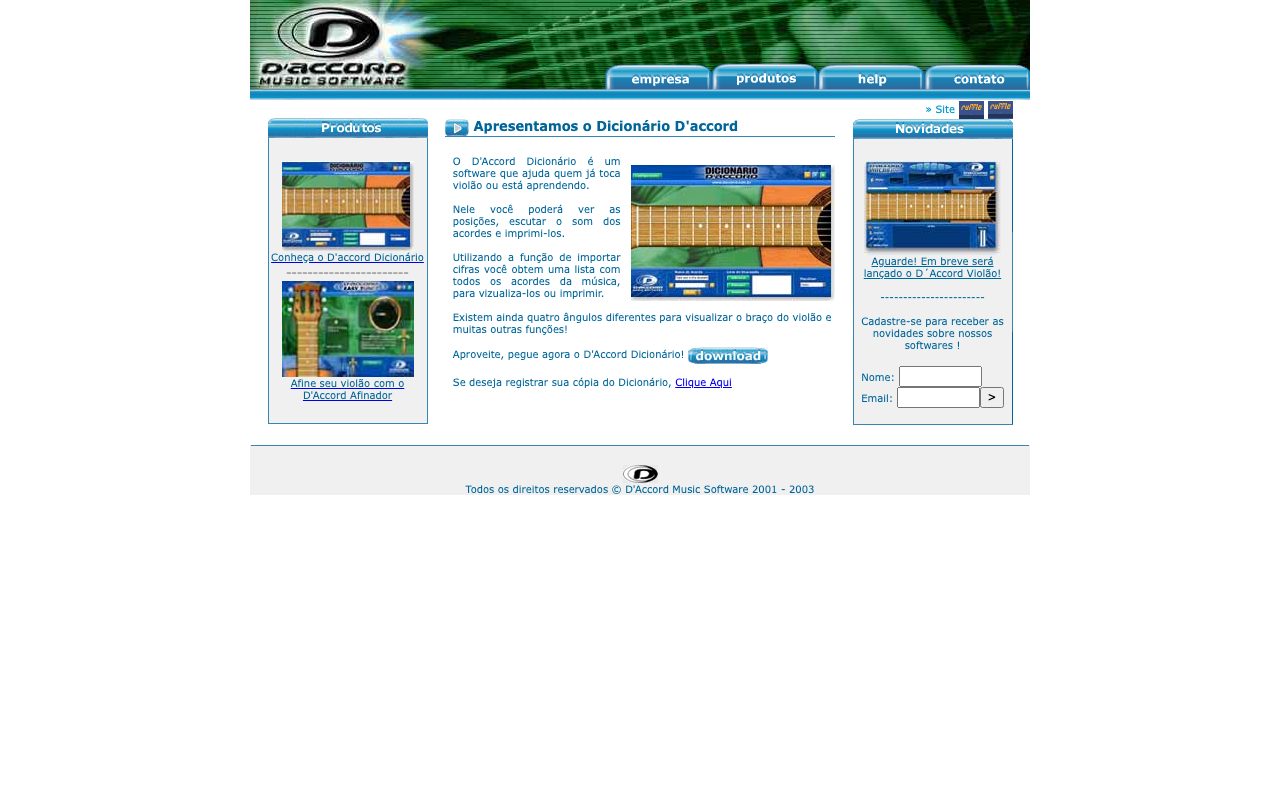
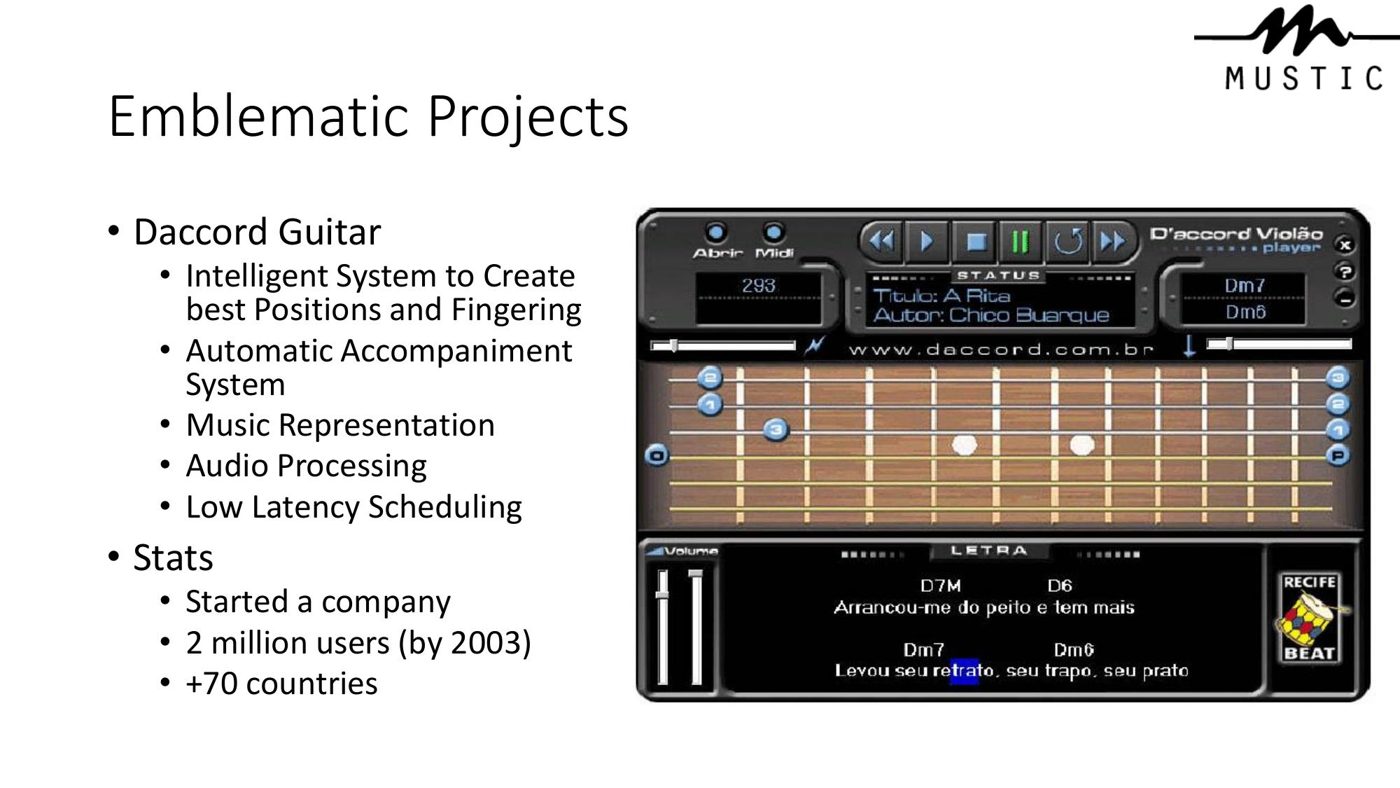
Giordano Cabral founded Daccord in 2000, within the musical computing group of UFPE's Centro de Informática, to bring to market the result of his master's thesis: D'Accord Guitar, later Violão Player, a virtual teacher for guitar, viola and cavaquinho. The company was incubated at RecifeBEAT and incorporated as a corporation in 2001. By 2003 the software was already being sold in the United States and Europe. In 2026 the company remains active, run by Rodrigo Pereira, with Cabral on the shareholder board.
Overview
Music software company from Recife, born in 2000 in the computer music group of what was then the Department of Informatics at UFPE, and pre-incubated at Recife BEAT — the "Base for High Technology Enterprises" of CIn, coordinated by Alex Sandro Gomes; a corporation since 2001 and, in 2004, among the debut companies of Porto Digital. There are two legal entities under the same brand. Daccord Music Software S.A. (CNPJ 04.768.360/0001-99, 2001, Rua Dona Maria César, 170) was the company behind the Finep awards from 2007 to 2012 and, from 2014, began operating as Escribo. Daccord Tecnologia Ltda (CNPJ 20.401.870/0001-80, opened on 06/06/2014, Rua Vigário Tenório, 194, suite 401; micro-enterprise, active status) is the one that uses the brand today: Rodrigo Mendes de Carvalho Pereira, managing partner since 2016 and CEO; Giordano Cabral, on the roster since 04/03/2018; Filipe Calegário, partner since 2020. Team listed on the site in 2026: Rodrigo Pereira, Filipe Calegário, Eduardo Santos, Mek Mouro, Luiz Haviel, Renata Santos, Fernanda Oliveira, and Giordano Cabral, as founder.
Sources: About Us, daccord.com.br, accessed on September 24, 2026; Daccord Tecnologia Ltda's registration at cnpjcheck.com.br and ownership information at consultasocio.com, accessed on September 17, 2026 (the latter was unavailable on September 24, 2026); Recife BEAT, September 24, 2026; Agência Sebrae de Notícias and FAPEMA, October 28, 2009.
What the company does
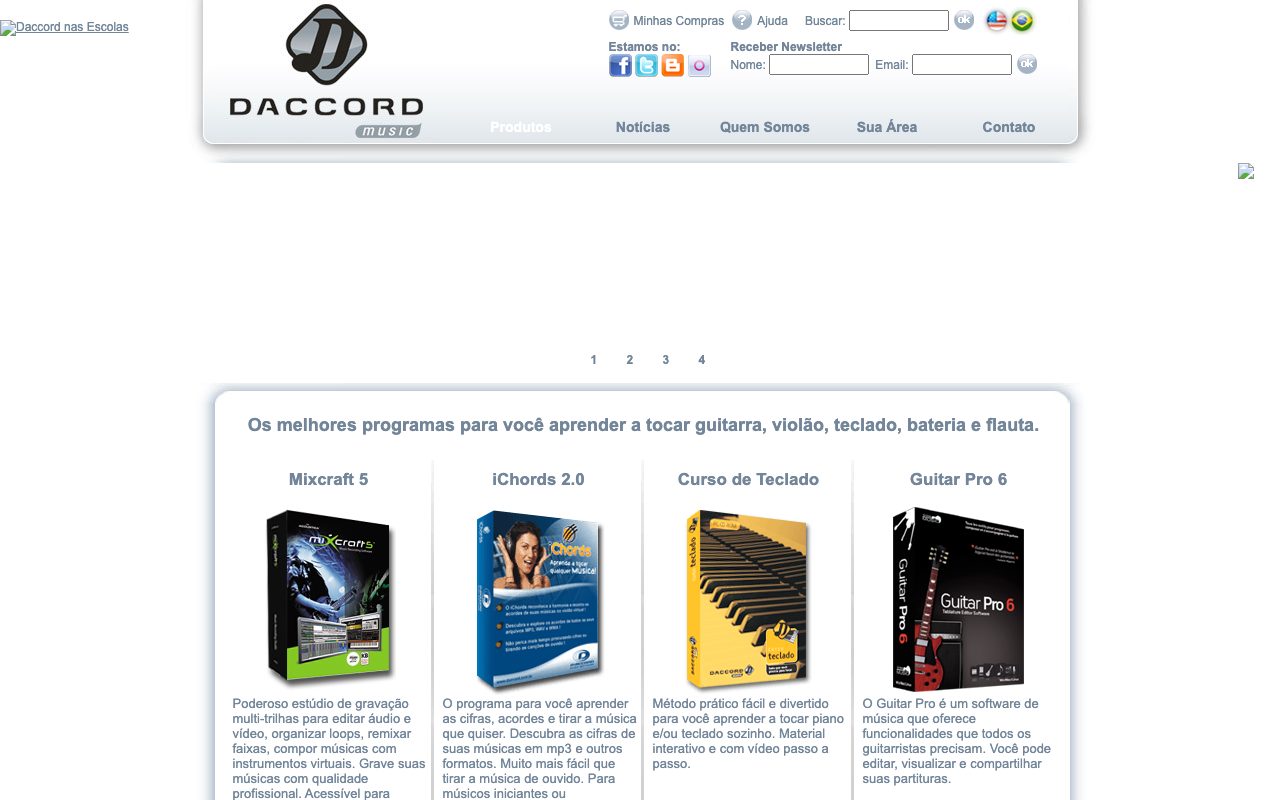
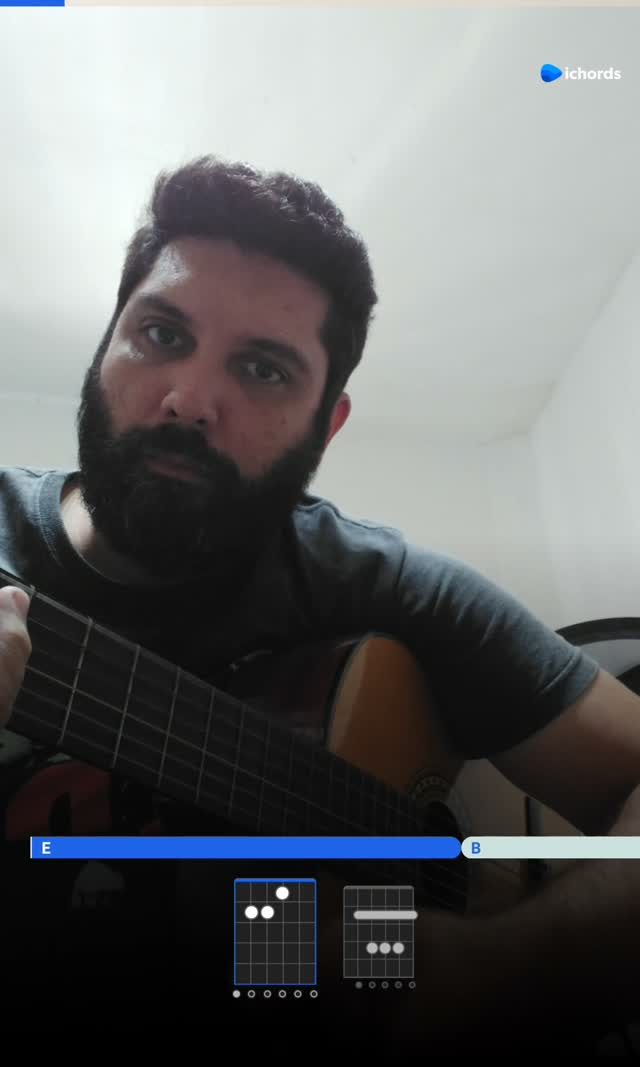
Software for learning an instrument — acoustic guitar, electric guitar, keyboard, drums, recorder —, iChords, which recognizes chords in audio files, multimedia courses and teaching materials for schools. In 2007, it opened its games division, MusiGames Studio. It has also operated an online store since 2001, distributing third-party software since at least 2012 and selling physical instruments since 2019.
The figures the website publishes today — more than 20 years in business, products used in 116 countries, 4 million uses, 450 titles in its catalog and 30 partner brands — are not recent, and their dates should be stated: the "About Us" page already reported the 116 countries and 4 million uses in June 2016, and the 450 titles and 30 brands in May 2022.
On that same 2016 page, the company described three areas of activity — bringing foreign music technology to Brazil, bringing innovation to music education and making music games —, stated that it had released more than ten games for iOS, Android, Symbian, the web and PlayStation, and reported partnerships with CIn/UFPE, CESAR and the Sony Computer Science Laboratory in Paris. The 2022 and 2024 snapshots add the MusTIC group among its partner initiatives. On May 29, 2023, Daccord appears in the gallery of partner companies for Residência Onboard, Porto Digital's training program (https://web.archive.org/web/20240424215537/https://residencia.portodigital.org/logosliderwp/daccord/).
Sources: daccord.com.br and the About Us page, accessed on September 17, 2026, with snapshots from 2012, 2014, 2015, 2016, 2018, 2019, 2022 and 2024 in the Wayback Machine.
Role at the company
- 2000 — development lead; the press describes the company as "created" by Cabral from his master's project (Sebrae News Agency, 10/28/2009). Lattes records the "D'Accord Product Line (16 products)" in 2000 and the "D'Accord Violão Player" in 2001, with I. Zanforlin, R. Q. C. Lima, and H. Santana.
- 2003–2008 — during his PhD in Paris, at LIP6 and Sony CSL, he remained with the company as a consultant and instructor in computer music, audio processing, and interactive systems.
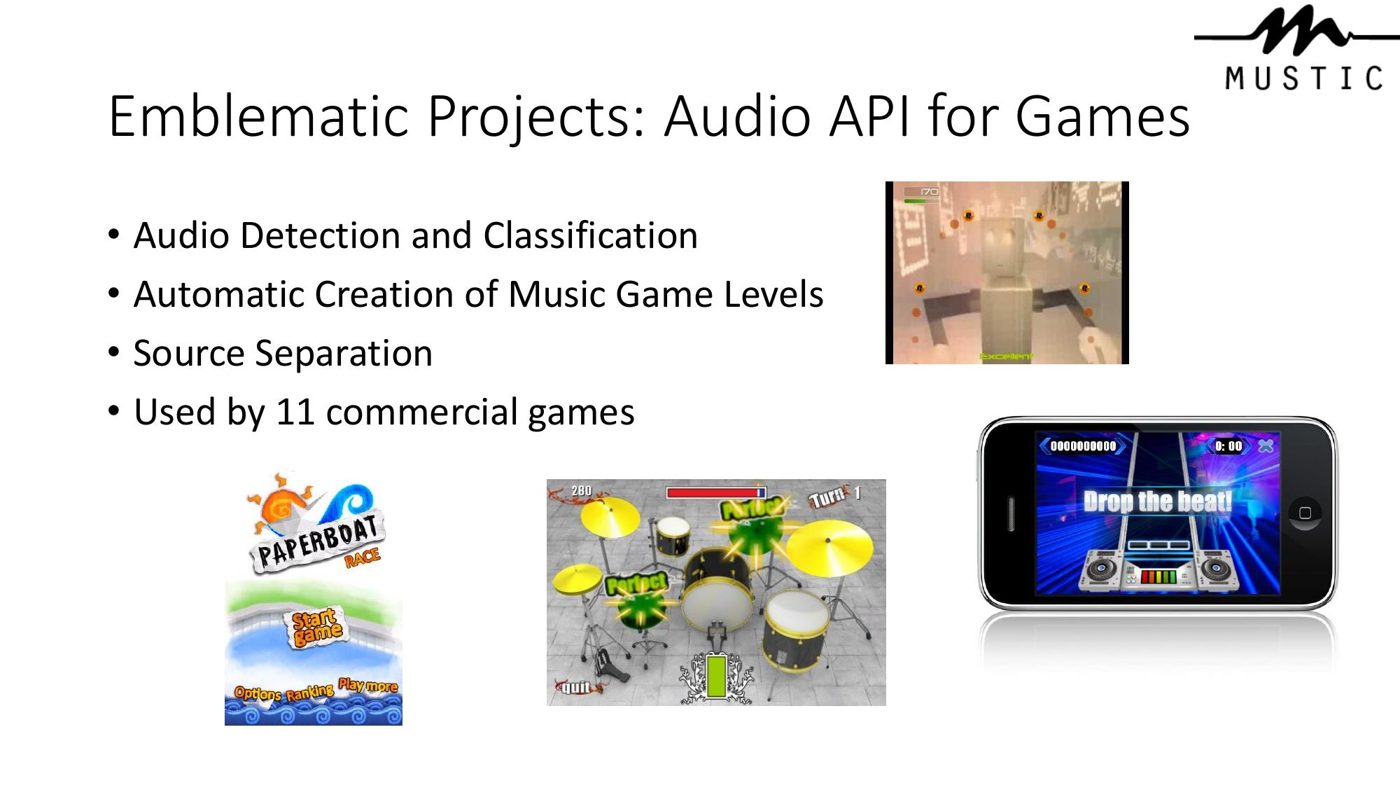
- Jun 2008–May 2010 — chief technology officer. Coordinated the "Audio API for New Media" project (FINEP, Economic Subsidy 2009, contract 01.09.0037.00) and "iChords.Net", and took part in "iChords: melody and harmony recognition engine" (RHAE/CNPq, 2008–2010, coordinated by Américo Amorim).
- 2009–2014 — presentations at music education events: tutorial at the 12th SBCM (2009), Feira Música Brasil (2009), the France-Brazil Year's Informatics and Music Workshop (2009), Expoidea (2010), the Music, Technology and Education Forum (2011), two ABEM regional meetings (2011 and 2012), Porto Musical (2013), and the ISME World Conference (2014), all recorded on Lattes. Presented the company at trade fairs: Feira do Empreendedor 2009 ("What is innovation?"), Game Connection 2009, Macworld 2010 (as development director of MusiGames), Nokia World 2011, BETT Show 2011 and 2012 ("Daccord music education solutions"). Also presented the company's pitch at the Finep Award 2012.
- 2011–2012 — organized, through Daccord Music Software, the course books for Musical Creation, Recorder, Keyboard, and Guitar, teacher's and student's editions, with Erika Pessoa Araújo, Evandro Natividade, and Anuacy Fontes; and, in 2012, "Turma do Som", book 1 and teacher's manual, with Cecília Cavalieri França.
- 2018– — partner at Daccord Tecnologia Ltda. iChords received support from FACEPE (Tecnova, coordinated by Rodrigo Pereira) and from Banco do Nordeste (FUNDECI 2020.0033, agreement of Dec/2020). In 2026 he is following the company's restructuring and the migration of iChords to AI-assisted programming tools. The current site lists him as "Founder".
Sources: Lattes (Escavador mirror, March 3, 2026) and September 2026 CV; Agência Sebrae de Notícias and FAPEMA, October 28, 2009; About Us, daccord.com.br.

Milestones
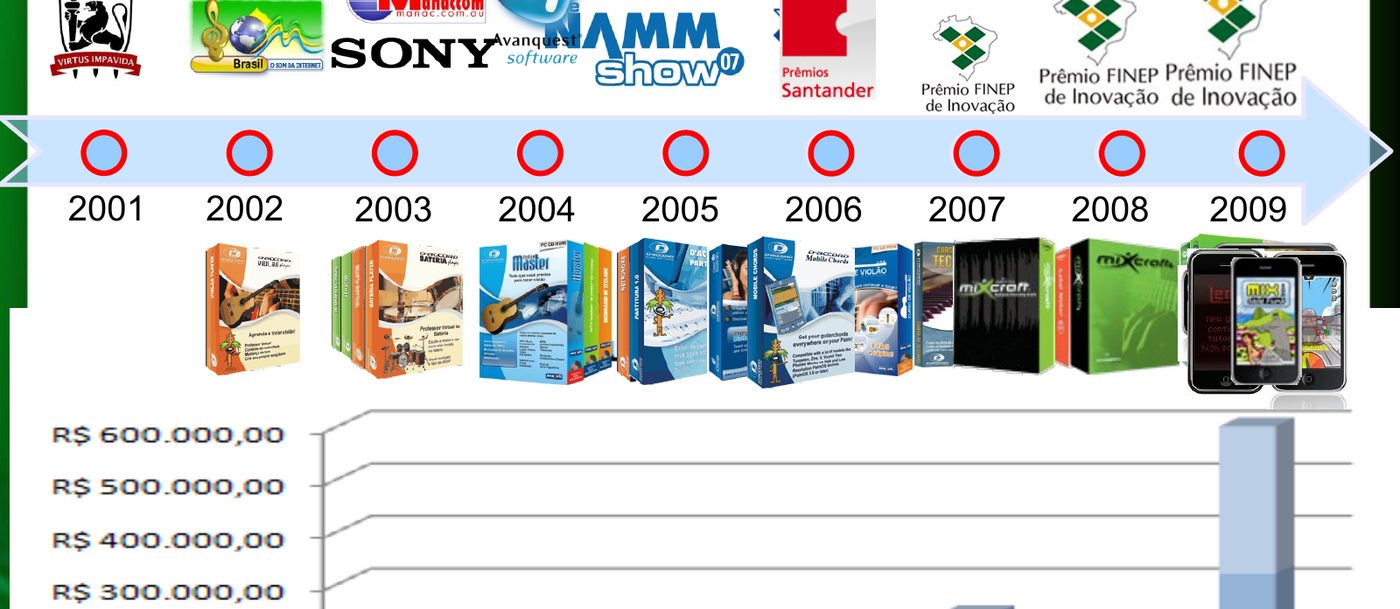
| Year | Milestone |
|---|---|
| 2000 | Founded and incubated at RecifeBEAT (CIn/UFPE); product under development based on the master's thesis. |
| 2001 | Website launched; Daccord Music Software S.A. incorporated. |
| 2002 | Market debut: a chord dictionary for acoustic guitar. |
| 2003 | Website offers D'Accord Dicionário and Afinador; sales begin in the US and Europe. |
| 2004 | Headquarters at Porto Digital, among the companies present when the park opened. |
| 2005 | Winner of the National Young Entrepreneur Competition (Cojem 2005), in Campina Grande (Jornal do Commercio, June 8, 2005). |
| 2006 | Santander Banespa Entrepreneurship Award, Technology category, for iChords (ceremony on November 29, 2006, at Palácio dos Bandeirantes); two Epsilon Award nominations (Violão Master and Dicionário de Acordes); 30,000 downloads per month (Diário de Pernambuco, January 4, 2006). |
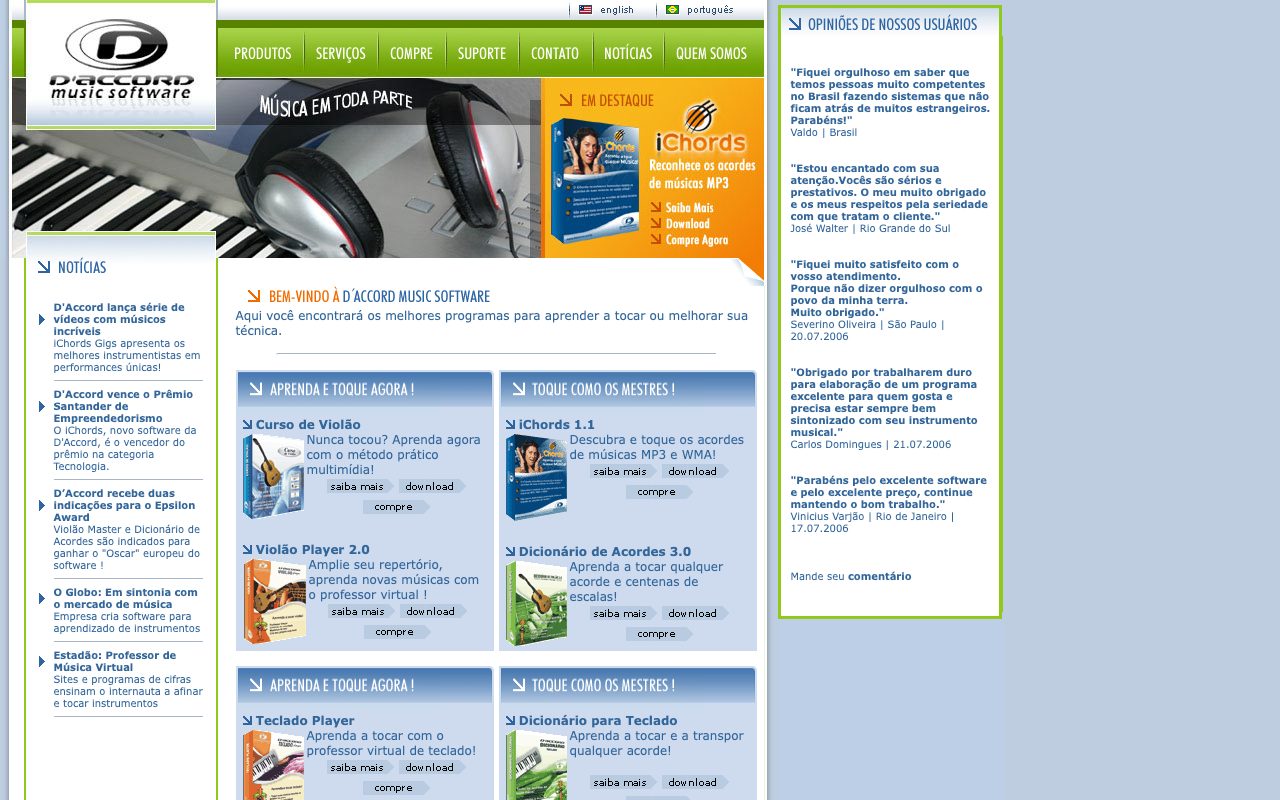
| 2007 | 3rd place in the Finep Innovation Award (Small Business); creation of MusiGames Studio; product line includes Curso de Violão, Violão Player 2.0, iChords 1.1, Dicionário de Acordes 3.0, Teclado Player, Bateria Player, Dicionário para Teclado, Violão Master, Afinador 3.0 and Editor de Partitura. |
| 2008 | 2nd place in the Finep Innovation Award (Small Business); R$ 1.68 million from FINEP's Economic Subsidy Program; team grows from 10 to 23 people; Américo Amorim is a finalist in the International Young Creative Entrepreneur award (British Council). |
| 2009 | 1st place in the Northeast regional round of the Finep Innovation Award, Small Business category (ceremony on November 16, 2009, at Instituto Ricardo Brennand), and a finalist in the national round; one of ten finalists in the Dell Technology Excellence Award; launch of Flauta Player and Curso de Guitarra; exports to 85 countries; relocation to Rua Dona Maria César, 170. |
| 2010 | R$ 1.5 million investment from Fundo Criatec (BNDES), announced in February; RHAE-Inovação grant (CNPq); Curso de Flauta for schools; partnership with Abril Educação (Ática and Scipione). |
| 2011 | 2nd place in the INFO Exame magazine's Entrepreneur of the Year award (Giordano Cabral, nominated together with Gustavo Caetano, Marco Gomes, Romero Rodrigues, Breno Masi, and Diego Reeberg); BETT Show in London; music course books. |
| 2012 | Winner of the Northeast regional round of the Finep Innovation Award, Small Business category, among 81 entries in the region and 13 finalists, with the Turma do Som and Saiba+ Enem projects and a R$ 200,000 prize (Revista Brasileiros, January 2013, pp. 112-113; Mundo Bit / Portal NE10, October 18, 2012); launch of Turma do Som (March) and Saiba+ Enem, an educational game on Facebook (July); Rede Tria and an e-book reader. |
| 2014 | Daccord Tecnologia Ltda established; the original S.A. continues as Escribo. |
| 2019 | Rodrigo Pereira as CEO; catalog includes 30 third-party brands; preorders for the Fretlight line of electric and acoustic guitars with LEDs on the fretboard — hardware, which the company had not previously distributed; the store's footer begins using the name Daccord Music LTDA; products used in 116 countries (Música & Mercado). |
| 2026 | Active company; supplier registration with the State of Pernambuco completed in Jul/2026; Giordano Cabral, Rodrigo Pereira, and Filipe Calegário on the roster. |
Products
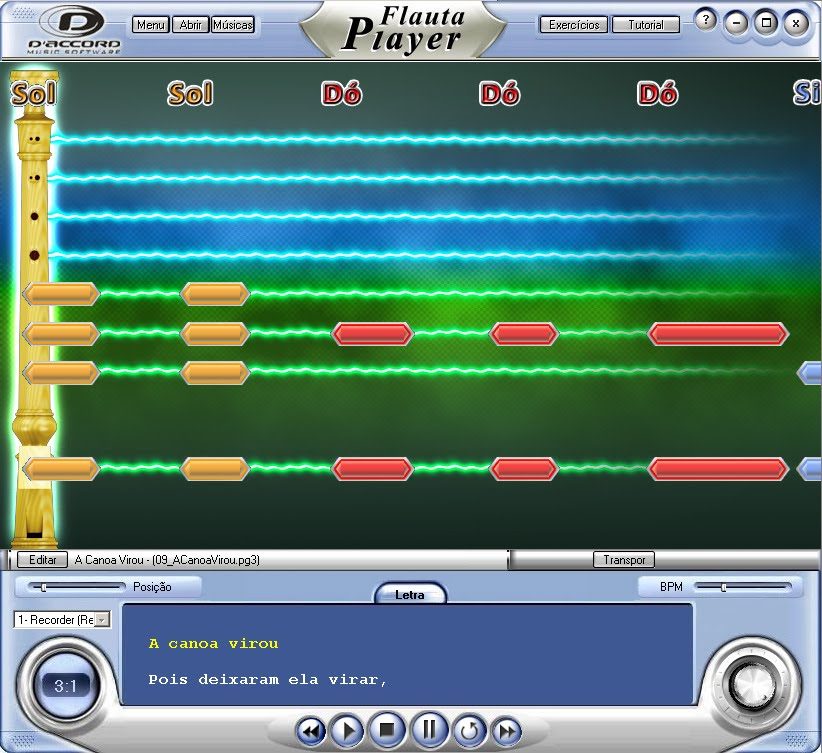
- Learning to play instruments. Violão Player (2001; 2.0 in 2007), Dicionário de Acordes de Violão e Guitarra (2003), Afinador Virtual (2004), Curso de Violão (2005), Dicionário de Teclado, Partitura, Easy Tuner and Bateria Player (2005), Teclado Player, Drums Player, Free Clef, Violão Master and Personal Guitarist (2006), Guitar Method and Keyboard Player (2007), Curso de Teclado (2008), Flauta Player, Curso de Guitarra and Keyboard Method (2009).
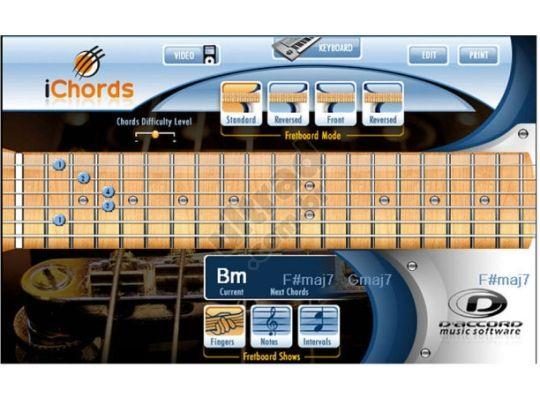
- iChords (2008; 2.0 in 2009; later versions in 2019). Opens MP3, WMA, and WAV files and shows, on a virtual guitar, the chords being played. It was awarded by Santander in 2006, when it was still a prototype, and has its own YouTube channel. The iChords 2.0 product page is the public source for the recognition engine: "the chords are generated automatically on the guitar neck, which can be shown in 4 different positions, including for left-handed players, and on the virtual keyboard", from "songs in MP3, WMA, and WAV formats and on CD"; and it displays the chords at three difficulty levels — easy, medium, or hard — (2016 capture).
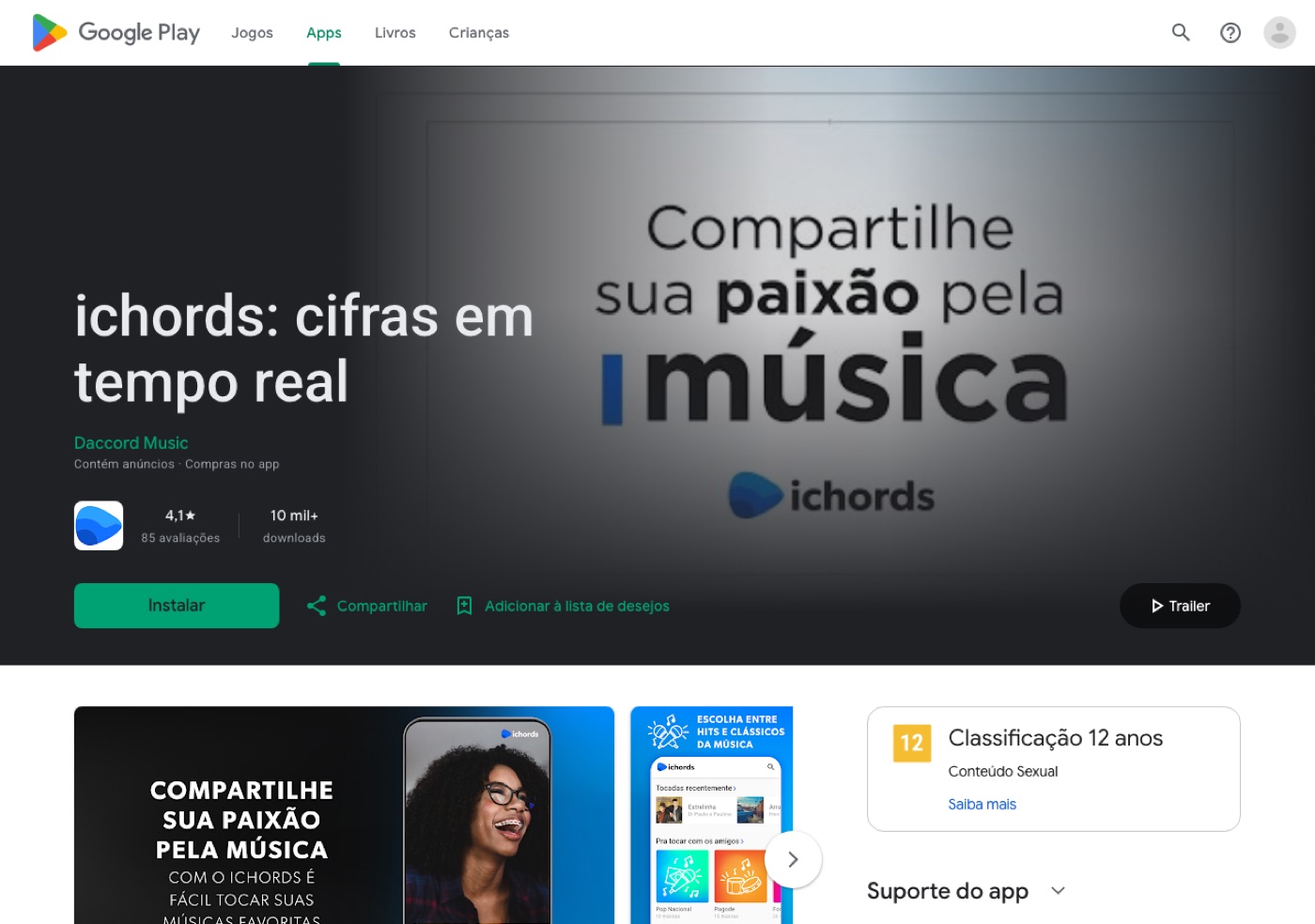
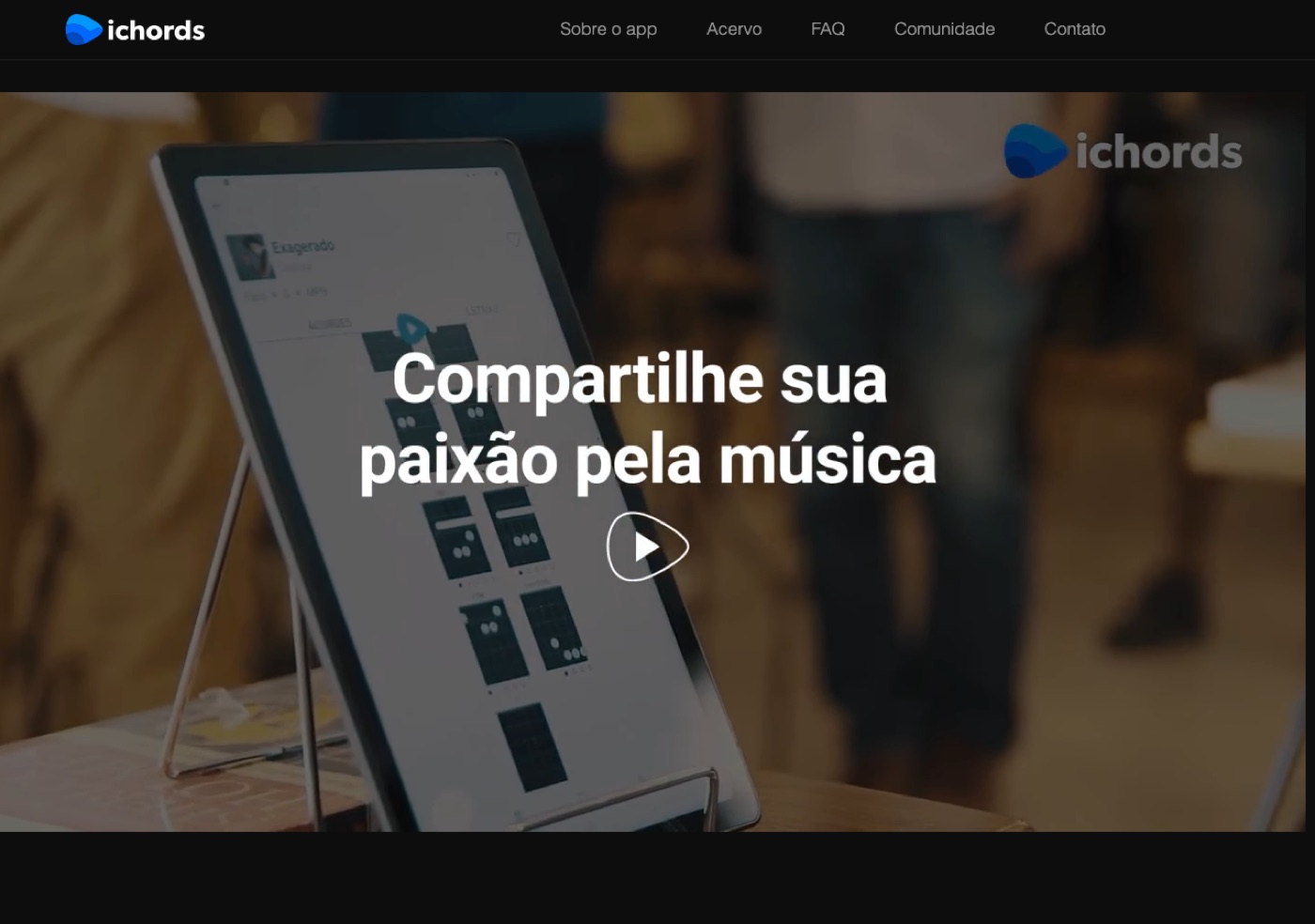
- iChords today. The product remains available as a free app. On Google Play, "ichords: cifras em tempo real", by Daccord Music, lists 10K+ downloads, a rating of 4.1 from 85 reviews, and a last update on August 25, 2025; its main advertised feature is "real-time chords, synchronized with the music", with video recording of performances, playlists, a setlist, and key and speed adjustment (
https://play.google.com/store/apps/details?id=com.ichords.android). It has its own website,https://ichords.app/, and a page in the company's store, alongside Afinador 3.0 — the two in-house products still remaining on the list (https://www.daccord.com.br/produtos/ichords-cifras-em-tempo-real/). The roadmap stated on that page includes Spotify integration, key transposition, chord simplification, looping, lessons with videos and exercises, synchronized lyrics, and other instruments.
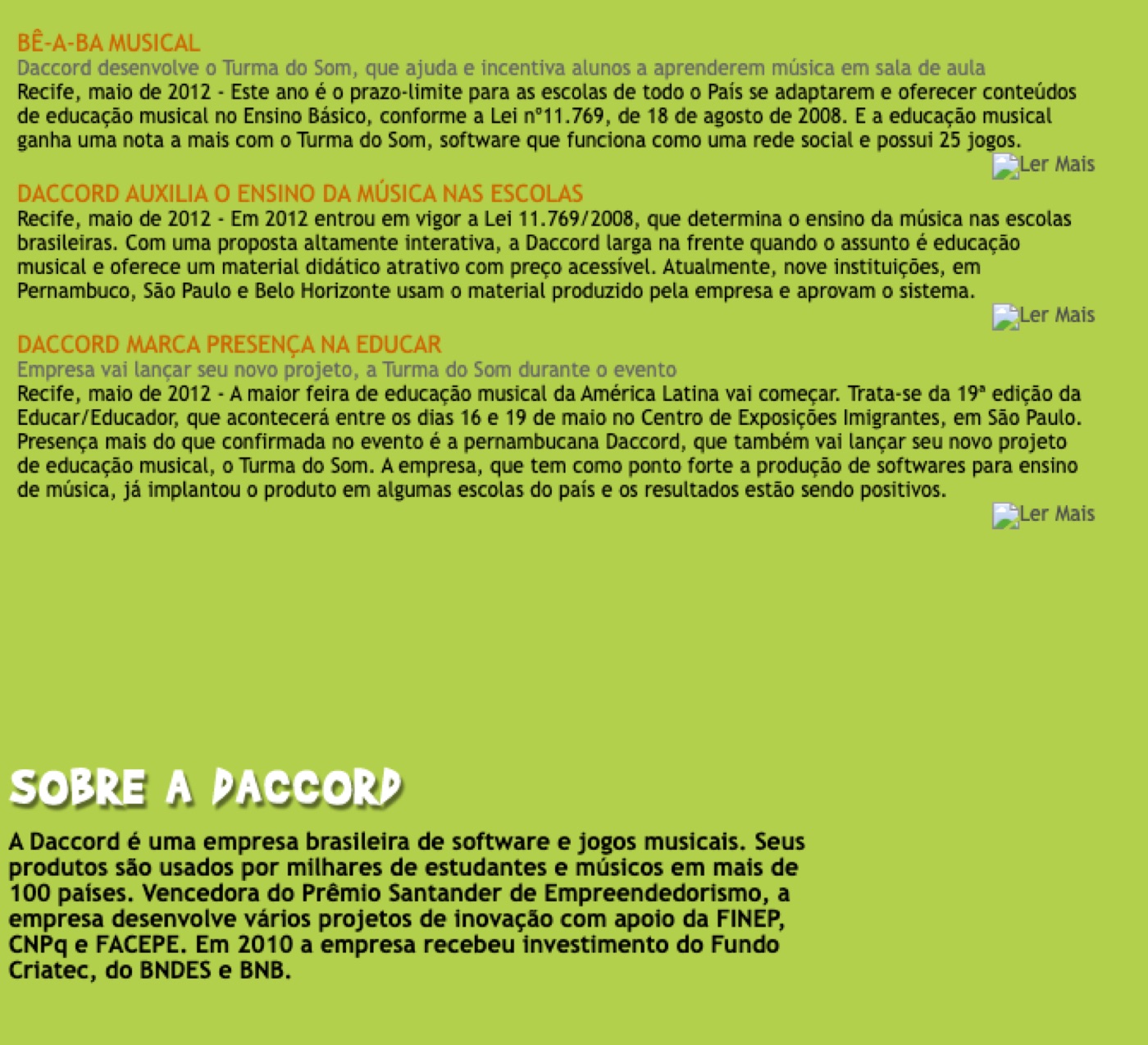
- Education in schools. Turma do Som — a portal, books, cartoons, and games for introductory music education, from 2012 —, Curso de Flauta Doce, Curso de Criação Musical, Curso de Teclado, and Curso de Violão, with teacher and student books, from 2011, and Saiba+ Enem, from 2012. The Turma do Som press kit, containing three press releases from May 2012, is the most complete public document on this area of activity: it describes the software as a social network with 25 games, organized into four thematic blocks — sound (timbre), pitch, time, and structure —, explained through animated videos and covering everything from early childhood music education to music creation; it names Cecília Cavalieri França, who holds a doctorate in music education from the University of London and was an adjunct professor at UFMG, as its educational consultant and notes that she became a character in the animations; it records three stages of teacher training, one held in person at the school; and it positions the product as a response to the deadline set by Law No. 11,769/2008. It names two schools using it, Instituto Peró, in Recife, and Organização do Auxílio Fraterno, and states that the material was being presented to education departments, some of which were adopting it as a pilot project. It also includes figures from a study commissioned by the company itself — 52.9% of students showing improved concentration and 98.6% considering technology helpful —, which should be read in that light.
The pedagogical consultant presented the platform on her own initiative. On June 5, 2012, in a message to the public mailing list "Professores de Música do Brasil" (Music Teachers of Brazil), Cecília Cavalieri França describes the "Turma do Som Platform, produced by Daccord Music Software" for the early years of elementary school, grounded in "active musical learning and personal construction of knowledge". She names the game Trilho Sonoro, a sound editor geared toward musical creation, as well as the user social network and the statistics system for assessment (https://groups.google.com/g/professoresdemusicadobrasil/c/064L8R2mJMs).
- Books and songbooks (2012–2015). O melhor de Legião Urbana, Songbook Bossa Nova vol. 1, Songbook Cazuza vol. 1, Songbook Djavan vol. 1, and Harmonia e Improvisação I, alongside Saiba+ Enem.
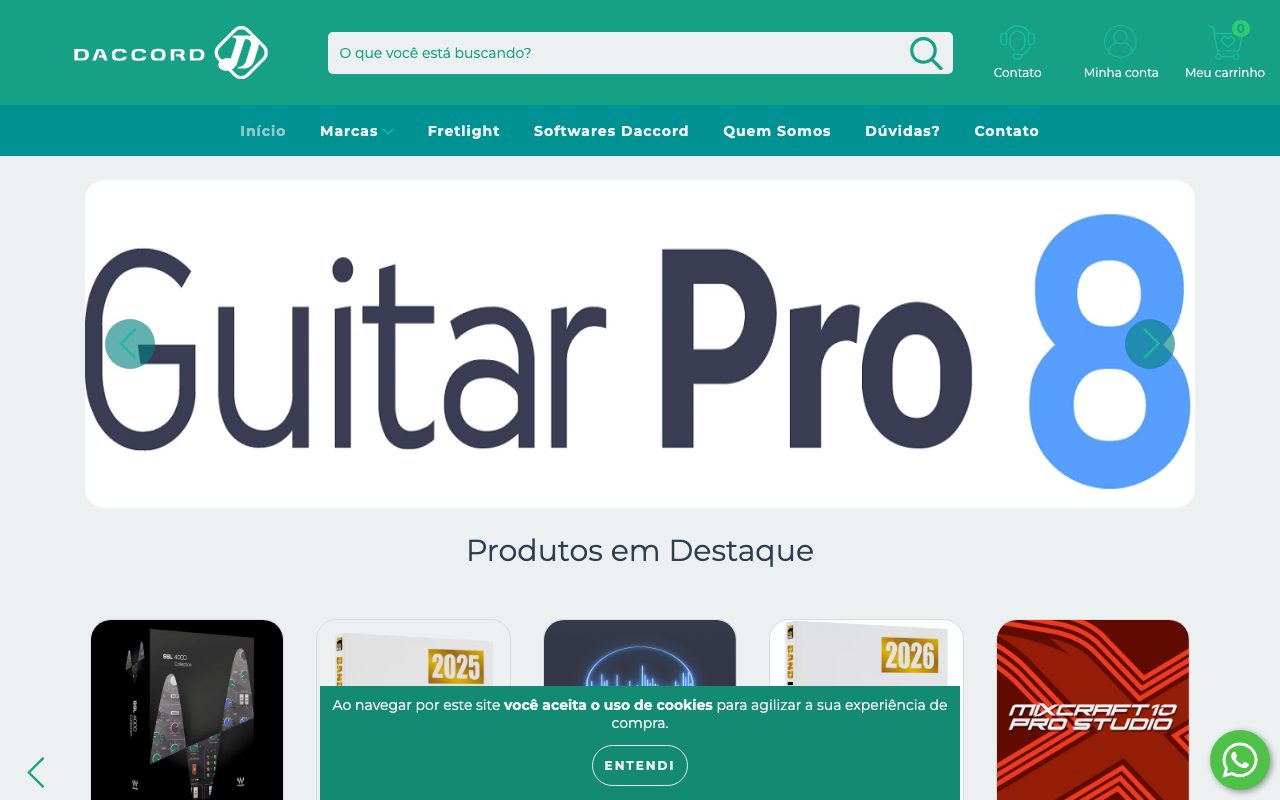
- Store. The distribution of third-party software in Brazil dates back to at least 2012, when the footer already advertised Finale, Mixcraft, Encore, EarMaster, Guitar Pro, Band-in-a-Box, Pianissimo, and CD-DVD Label Maker (2012 snapshot). The catalog grew from 15 brands in September 2016 to 28 in June 2018 and 30 in October 2019 (2016, 2018, 2019), including Acoustica, Antares, Applied Acoustics, Arobas, Celemony, EarMaster, EastWest, Image Line, MakeMusic, Pianoteq, PG Music, Serato, Sonarworks, U-he, and Magix. In September 2026, the brands menu has 31 entries, and the catalog has continued to change: Avid, Bitwig, FabFilter, iZotope, KUASSA, Slate Digital, Waves, IK Multimedia, Steinberg, XLN Audio, Fender, MOK, PreSonus, and Fretlight were added, while Applied Acoustics, Cantovation, Passport, Audionamix, Cableguys, Hexachords, kiloHearts, OpenLabs, Sonarworks, SONiVOX, and Trap Life were removed (
https://www.daccord.com.br/marcas/). The store is organized by audience and maintains a dedicated Educational Institutions page, featuring EarMaster, Sibelius, Band-in-a-Box, and Pro Tools (https://www.daccord.com.br/instituicoes-de-ensino); the current "About Us" page names "Teachers and Educational Institutions" among its audiences, providing documented continuity of its education activities beyond 2014. - Fretlight (2019). A dedicated section in the store, with preorders for the Guitarra Fretlight FG-621 Sem Fio and the Violão Fretlight FG-629, instruments with a fretboard lighting system that displays songs, chords, scales, and riffs (preorder page). This is the earliest public record of the company distributing a physical instrument.
- Brazyle. A database of Brazilian songs created by the company and used, according to the company itself, in Flow Machines, an artificial intelligence music composition project (About Us, 2022). The earliest public description of this connection by a third party is the program for FIC 2018, in Porto Alegre, which presents the company as "the Brazilian bridge to the European Flow Machines project" (October 1, 2018).
Sources: Wayback Machine snapshots of the store and the About Us page (2012, 2014, 2015, 2016, 2018, 2019, 2022, and 2024); Turma do Som press kit; Professores de Música do Brasil public mailing list, June 5, 2012; Google Play and ichords.app, accessed in September 2026.
Awards
- 2005 — National Young Entrepreneur Competition (Cojem), Softex.
- 2006 — Santander Banespa Entrepreneurship Award, Technology category, with iChords.
- 2006 and 2007 — nominations for the Epsilon Award (European Software Conference); a nomination for the Shareware Industry Awards, with Violão Master.
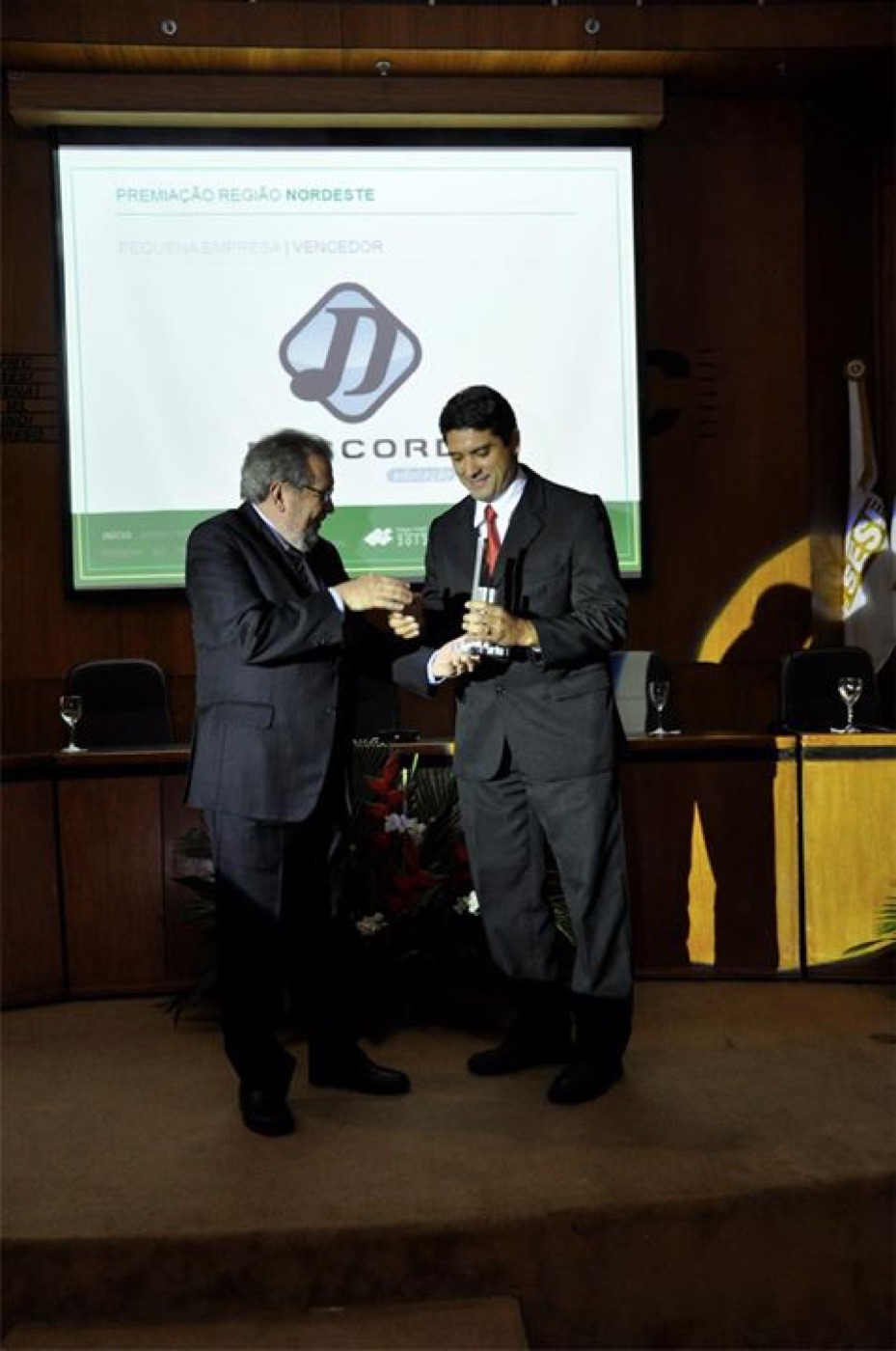
- 2007, 2008, and 2009 — 3rd, 2nd, and 1st places in the Finep Innovation Award, Small Business category, Northeast regional stage; national finalist in 2009. The 2009 award presentation is documented in a public video dated November 17, 2009.
- 2009 — finalist for the Dell Technology Excellence Award.
- 2011 — 2nd place, Entrepreneur of the Year, INFO 2011 Award (INFO Exame magazine).
- 2012 — winner of the Northeast regional stage of the Finep Innovation Award, Small Business category, with the Turma do Som and Saiba+ Enem projects and a prize of R$ 200,000 (Revista Brasileiros, January 2013; Mundo Bit / Portal NE10, October 18, 2012).
A clarification of scope, supported by the source: the two Finep wins, in 2009 and 2012, were regional. The list of twelve winners of the 2012 national stage, in the same magazine material, does not include the company — and the company itself described it this way: "In 2009 and 2012, Daccord won the FINEP Innovation Award in the small business category in the Northeast region" (Daccord Escolas portal, 2015 snapshot). The NE10 blog calls it the "2012 FINEP Innovation Award" without specifying the stage; FINEP's own magazine and the official awards gallery show that it was the Northeast regional stage.
Sources: Revista Brasileiros, January 2013, hosted by Finep; official gallery "Cerimônia de Premiação da Região Nordeste — Edição 2012", from premio.finep.gov.br, now accessible only through the Internet Archive: https://web.archive.org/web/20150617220406/http://premio.finep.gov.br/multimidia/multimdia/36; video of the 2009 awards ceremony; Jornal do Commercio, June 8, 2005, and November 17, 2009.
Press
O Globo ("Em sintonia com o mercado de música"), O Estado de S. Paulo ("Professor de música virtual"), Folha de S.Paulo ("Softs de música levam estúdio para casa"), Diário de Pernambuco ("Vendedor 24 horas", January 4, 2006), Jornal do Commercio (Cojem, June 8, 2005; British Council, October 1, 2008; Finep Award, November 17, 2009; investment of more than R$ 1 million, February 10, 2010; MusiGames leads iPad downloads, May 26, 2010), Pequenas Empresas & Grandes Negócios ("Bateria virtual do Recife para o mundo", January 19, 2009), Época Negócios ("Eles fazem diferente", February 26, 2010), Agência Sebrae de Notícias and FAPEMA ("Empresa exporta software musical para 85 países" / "Empresa pernambucana faz sucesso com jogos para iPhone", October 28, 2009), Revista Inovação em Pauta by Finep (No. 7, October 2009, and No. 8, 2010), Backstage (March 2010, iChords), Instituto Claro ("Softwares potencializam ensino de música nas escolas", December 4, 2012, by Aline Aurilli, https://www.institutoclaro.org.br/educacao/nossas-novidades/noticias/softwares-potencializam-ensino-de-musica-nas-escolas/), NE10 portal's Mundo Bit blog ("Pernambucana Daccord vence Prêmio Finep de Inovação", October 18, 2012), Música & Mercado ("Daccord desenvolve software para a indústria musical", May 7, 2019).

Images from the archive
From the institutional Drive, retrieved on September 18, 2026.
10 · Strategy and business2007–2014
MusiGames Studio
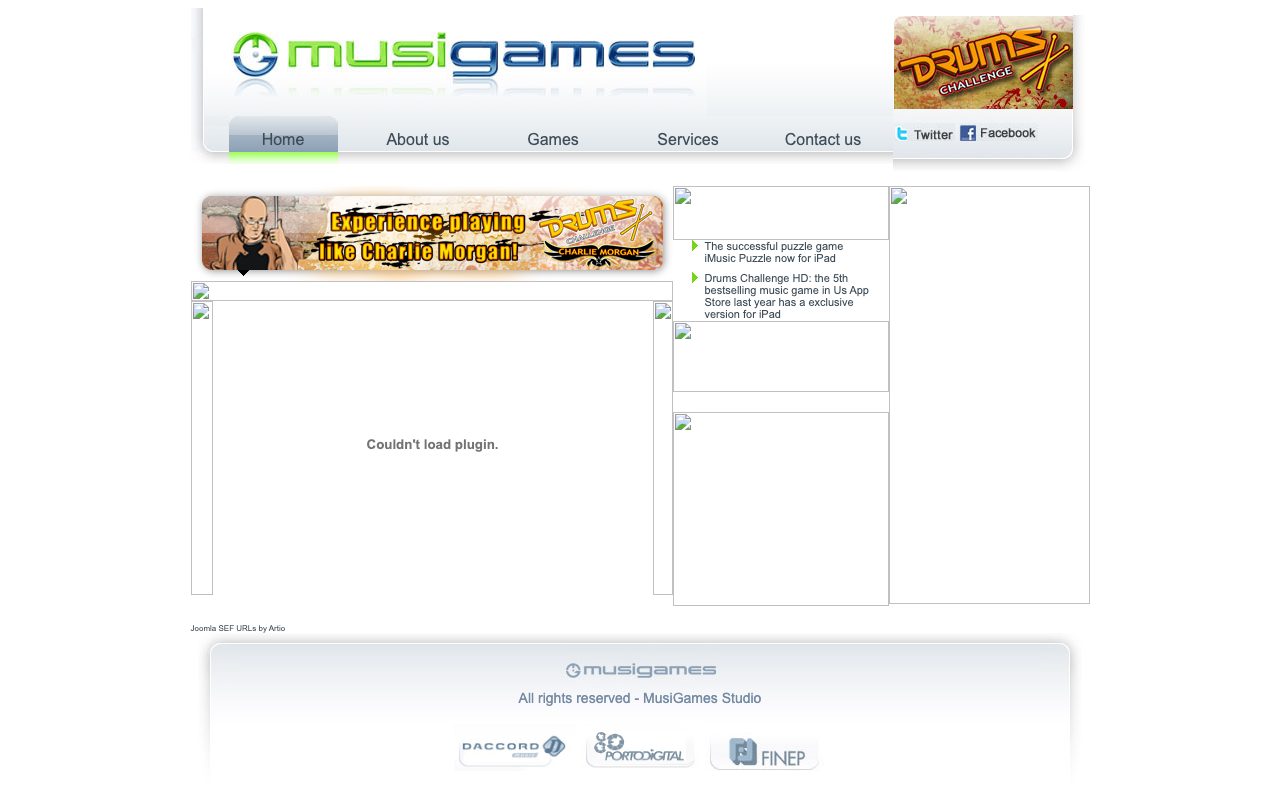
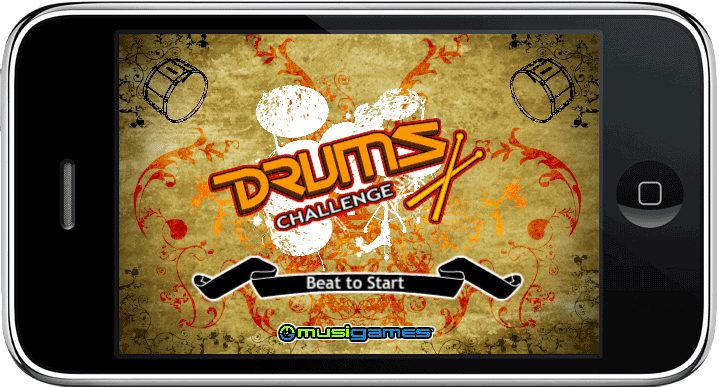
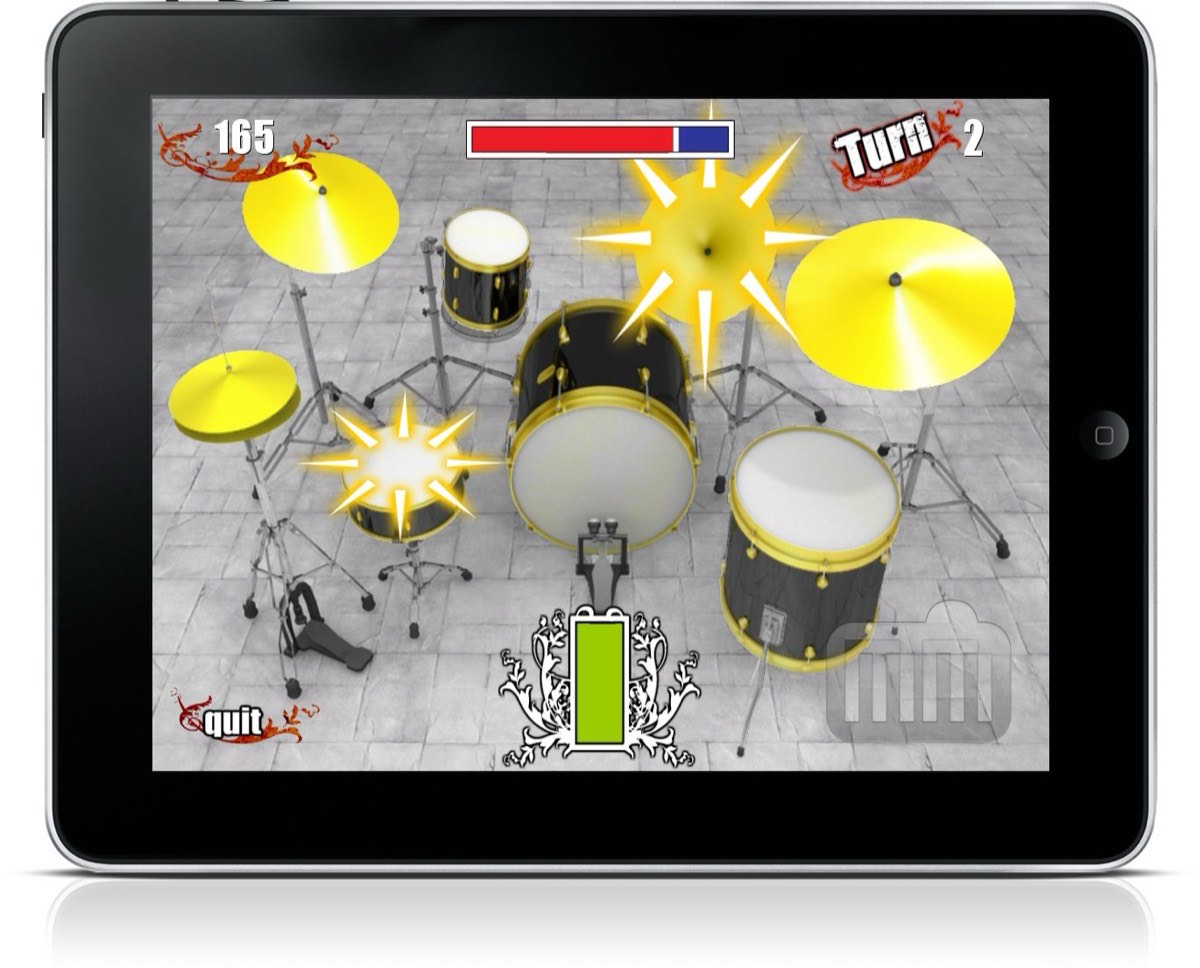
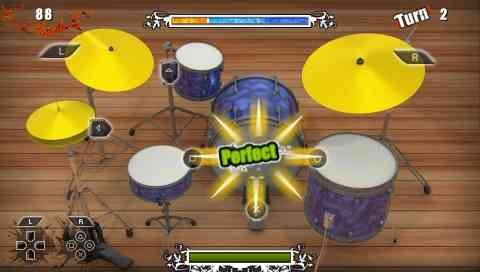
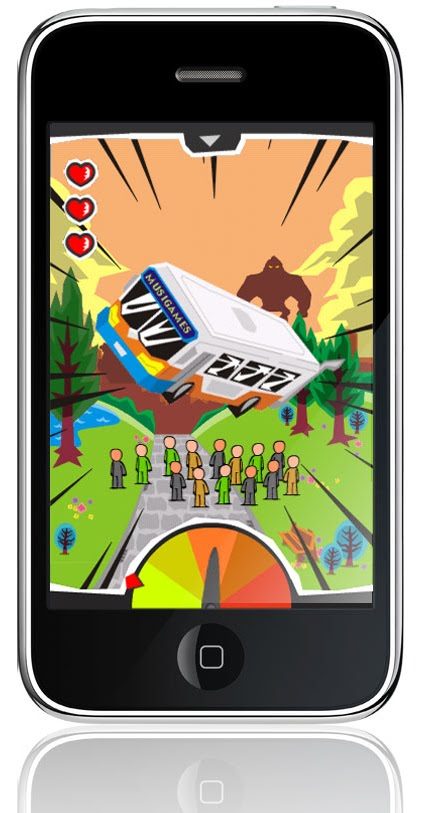
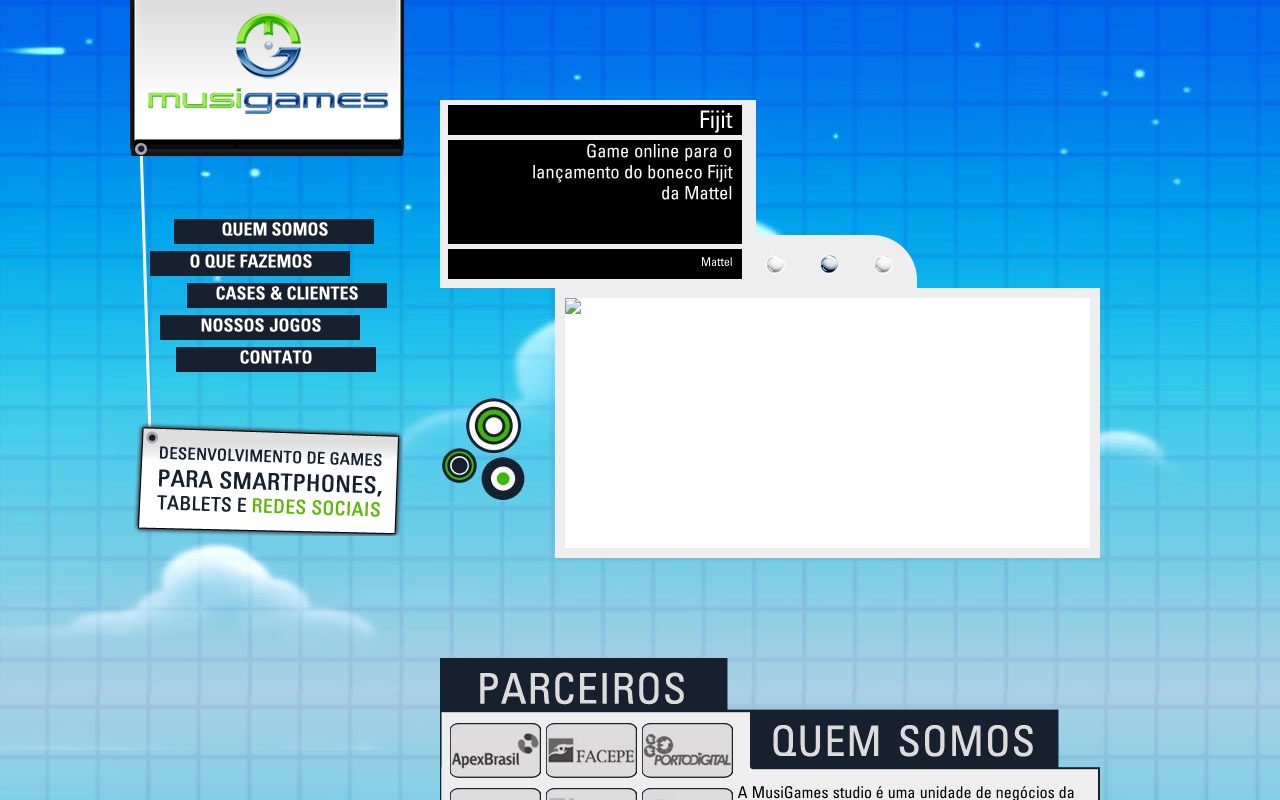
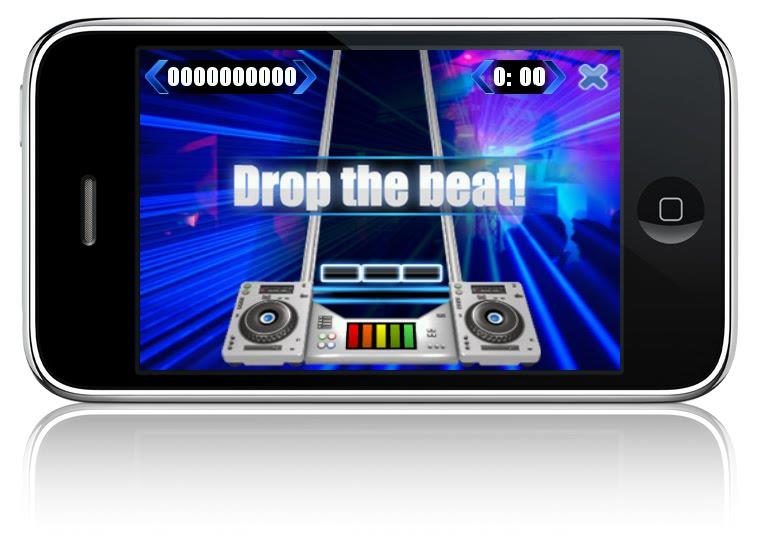
MusiGames Studio was created by Giordano Cabral in 2007 as a business unit of D'Accord Music Software, at Porto Digital, to apply the company's audio and computer music technology to games. Its best-known game, Drums Challenge, entered the App Store for iPhone and iPod touch on June 13, 2009, and closed its debut month in fifth place among the best-selling music games in the United States; the iPad version, from April 2010, was the best-selling paid music game on the device in the United States and in several European countries. The project that opened the studio was DJ Nights, announced for PC and consoles; the one that reached the market first was Drums Challenge. Games for Android, Nokia's Symbian^3, PlayStation Minis for PSP and PS3, Facebook, and Orkut followed, along with educational games and advergames.
Sources: captures of musigames.com on the Wayback Machine (2010 and 2012); D'Accord/MusiGames blog (Jun 2009–Mar 2010).
Overview
D'Accord Music Software's music games business unit, established in 2007 at Porto Digital; there is no record of a separate legal entity. In May 2010, it had 28 people. Its catalog covered iPhone and iPad, Android, Symbian (Nokia), PlayStation Minis (with Sanuk Games, 2011), Facebook and the web, plus advergames for Coca-Cola, Mattel and Rock in Rio; in September 2012, the website listed Apex-Brasil, Chillingo, CIn/UFPE, CNPq, FACEPE, FINEP, I-play, Oberon Media, Porto Digital, Sanuk Games and Stream as partners. There is no public record of activity after 2014, and in 2016 the musigames.com domain became a generic page.
Sources: Wayback Machine captures of musigames.com (2010, 2012 and 2016); Jornal do Commercio, May 26, 2010; AFJV, April 9, 2011; Lattes (September 13, 2026).
Work at the studio
Cabral founded the unit within D'Accord; on LinkedIn the role appears as "Owner, MusiGames Studio, July 2008 – December 2014", and a 2009 talk at CIn/UFPE announces him as "founder of D'Accord Music Software / MusiGames". As development director, he represented the studio at the Mobile Application Showcase of Macworld 2010, in San Francisco, in February of that year (company blog, February 8, 2010), and in March at GDC and Game Connection.
Three presentations are recorded on Lattes: Game Connection 2009 ("Jeux vidéo du MusiGames Studio"), Macworld 2010 ("MusiGames Studio titles for iOS") and Nokia World 2011 ("MusiGames Studio presentation").
He coordinated the project "Audio API para Novas Mídias" (Audio API for New Media) (FINEP, 2009 Subvenção Econômica grant), which funded the games' audio technology. The MusiGames product line — nine products in 2009 — and the games below are listed as his technical production on Lattes, several of them with Renan Lima, Dante Araújo, and Leocádio Tiné.
Sources: Lattes CV (technical output and events); LinkedIn (December 2022 export); company blog, February 8, 2010.
Games
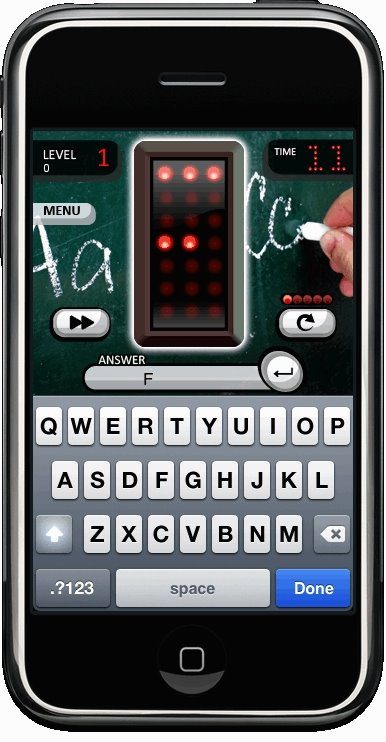
| Game | Platform | Release |
|---|---|---|
| Web Drums | web | 2008 |
| Drums Challenge | iPhone/iPod touch | June 13, 2009 (Lite version in July) |
| Leds | Android, iPhone | 21/07/2009 |
| Riot Up | PC | 2009 |
| Throat Detonator | iPhone (voice control) | 24/09/2009 |
| MixBox Baile Funk | iPhone | 19/10/2009 |
| DJ Nights Global Tour | iPhone (published by Chillingo; music by Tiësto, Tom Cloud and Emilio Fernandez) | 18/11/2009 |
| DJ Nights Julie Thompson Edition | iPhone | Nov 2009 |
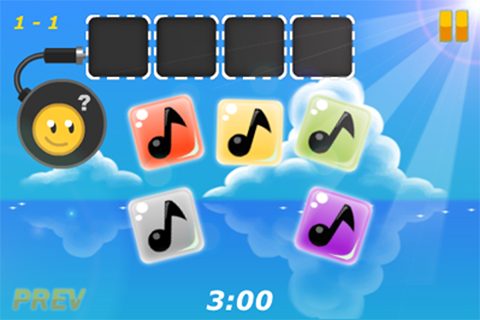
| iMusic Puzzle | iPhone; later iPad | Mar 2010 |
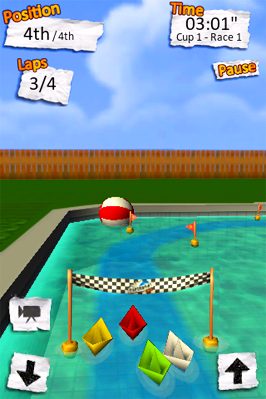
| Paper Boat Race | iPhone (blowing into the microphone and accelerometer) | 19/03/2010 |
| Drums Challenge HD | iPad | 12/04/2010 |
| DJ Nights Eurodance Edition | iPhone | Sep 2010 |
| Drums Challenge Nokia | Symbian^3 | 2011 (Ovi Store listing) |
| Drums Challenge (PlayStation Minis) | PSP/PS3, with Sanuk Games | announced on April 9, 2011 |
| Drums Challenge Coca-Cola and Rock in Rio Burn Game | iOS and web, for Coca-Cola Company | 2011 |
| Drums Challenge special version | — | 2012 |
| Fijit Friends Dance Party (Mattel) and Beijo de Cinema (Shopping Recife) | advergames on Flash and Facebook | 2011–2012 |
A qualification regarding the size of this list on the Nokia store: the studio's catalog there consisted only of Drums Challenge and its Lite version, rather than a line of games (publisher page, 2011).
Part of the catalog was commissioned work. In 2016, the company listed custom games made for Coca-Cola, Mattel, Rock in Rio and Grupo Abril, and for the artists Julie Thompson, Charlie Morgan and Robbie Rivera (About Us, 2016).

Milestones
- 2007 — unit established; 2D/3D art team formed; work begins on DJ Nights and a proprietary audio engine, the "MusiGames Engine".
- 2008 — Américo Amorim, executive director of D'Accord, represents the MusiGames project at the British Council's International Young Creative Entrepreneur award in London.
- 2009 — Drums Challenge among the best-selling music games on the App Store in the United States and the United Kingdom; in August, Edge magazine mentions MusiGames in an article on self-publishing on the iPhone; interview in Revista Inovação em Pauta published by Finep ("Brasil inova em jogos eletrônicos", no. 7); participation in SBGames 2009; 2009 Finep Innovation Award, Northeast regional stage, for D'Accord/MusiGames.
- 2010 — Macworld, GDC and Game Connection in San Francisco; R$1.5 million investment from Fundo Criatec; Drums Challenge HD reaches No. 1 among iPad games in the United States (Jornal do Commercio, May 26, 2010); in December, Santander's "Conexões de Ideias" video shows Marcelo Tas playing Drums Challenge.
- 2011 — Vice/Creators Project publishes "Playful musical puzzle apps from MusiGames" (January 13, 2011); Drums Challenge for Nokia and an invitation to Nokia World 2011; games for Coca-Cola (Drums Challenge Coke and Rock in Rio Burn Game); Drums Challenge for PlayStation Minis, with Sanuk Games.
- 2012 — the website is repositioned around "games for smartphones, tablets and social networks", educational games and advergames.
- 2014 — the affiliation recorded on LinkedIn ends in December; Daccord Tecnologia Ltda is established in June.
Press
MacMagazine, "Desenvolvedora brasileira MusiGames Studio lança jogo de bateria para iPad" (April 12, 2010); Jornal do Commercio, "Musigames lidera downloads do iPad" (May 26, 2010) and "Game da D'Accord em sétimo lugar" (March 17, 2010); Vice/The Creators Project, "Playful Musical Puzzle Apps From MusiGames" (January 13, 2011); AFJV, "Drums Challenge coming soon on PlayStation Minis" (April 9, 2011); AppAddict, "Chillingo and MusiGames get some rhythm w/ DJ Nights" (November 9, 2009); Edge magazine (August 2009); Inovação em Pauta magazine, Finep (no. 7, October 2009); Pequenas Empresas & Grandes Negócios (January 19, 2009); FAPEMA and Agência Sebrae de Notícias (October 28, 2009); Metacritic (entries for Drums Challenge and DJ Nights Eurodance).
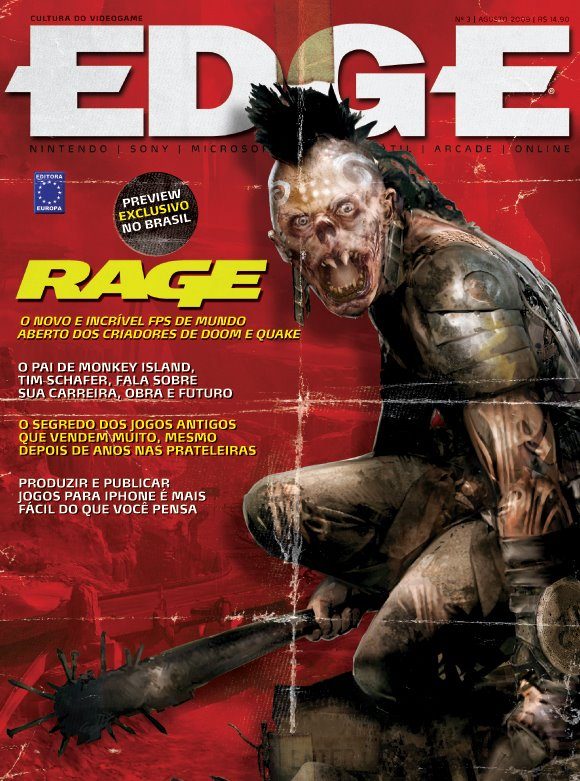
Images from the archive
From the institutional Drive, retrieved on September 18, 2026.

11 · Strategy and business2001–2017
Escribo — Innovation for Learning
Escribo is the corporation founded in 2001 as D'Accord Music Software, a music software company that in 2014 began operating as Escribo — Inovação para o Aprendizado (Innovation for Learning), focused on education; the Daccord music software brand continued in a new company. Giordano Cabral was co-founder from 2001 to 2017.
Overview
Educational technology company from Recife: the corporation founded in 2001 as D'Accord Music Software, renamed starting in 2014 for its education business, while the Daccord music software brand moved to Daccord Tecnologia Ltda. It produced digital content, games and educational consulting services for schools, publishers and school systems — Turma do Som (2012; finalist for the 2015 Prêmio Jabuti in the Digital Children's Book category), Curso de Flauta Doce, digital books for publishers (2014–2015) and Sistema Frei.re (2016–2017) — with reported partnerships with Abril Educação (2010), Saraiva (2011–2012), FTD (2013), Ibep (2013) and SM (2014), participation in the Endeavor Promessas program (2014) and MPT.Br certification (2013–2014). In 2026, escribo.com describes itself as "pedagogical AI for early childhood and early primary education", based in Recife. The corporate document confirming the name change was not located.
Sources: "Nossa história", Escribo, 2018 capture; Turma do Som finalista do Jabuti, October 23, 2015; escribo.com, accessed on September 24, 2026; Lattes (September 13, 2026).
Why it is the same company
That Escribo is Daccord under another name is not an inference made by this site: it is what Escribo's own "Our history" page states. It recounts the history of D'Accord Music Software as its own — founded in 2001 with support from the CIn/UFPE incubator, applications sold in the United States and Europe in 2003, arrival at Porto Digital in 2004, the Santander Award in 2006, the Finep Award in 2009 and 2012, Drums Challenge on the iPhone and iPad, and investment from Fundo Criatec in 2010. Both websites used the same phone number, 81 3224-5022. And in its application for the 2012 Finep Award, Daccord Music Software S.A. already listed "educational technology" as its field of activity, with Turma do Som as its flagship product.
The most consistent reading of the sources, then, is this: Escribo is the corporation founded in 2001, renamed from 2014 onward for its education business, while the Daccord music software brand moved to a new company, Daccord Tecnologia Ltda. The corporate document confirming the name change has not been located.
Sources: "Our history", Escribo, 2018 snapshot; Escribo homepage, 2015 snapshot; escribo.com, accessed September 17, 2026; Daccord Music Software S.A.'s application for the 2012 Finep Award.
Work at Escribo
According to Lattes, Cabral was co-founder from 2001 to 2017; on LinkedIn the role appears aggregated as "D'Accord Music Software / MusiGames, Owner, 2000–2016". Between 2008 and 2010 he was a research fellow under CNPq's RHAE Pesquisador na Empresa (Researcher in the Company) program, on the iChords project. In 2010 he took over as director of technology and creation, the year the company developed the Flute Course and Turma do Som for schools. He edited the Turma do Som books in 2012 with Cecília Cavalieri França, and the books for the Musical Creation, Recorder, Keyboard, and Guitar courses in 2011, published by Daccord Music Software S.A. He has had no ties with the company since 2017.
Sources: Lattes, Escavador mirror dated March 3, 2026; LinkedIn.
Products
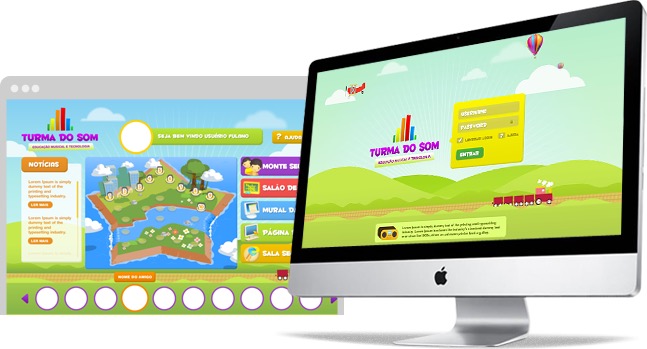
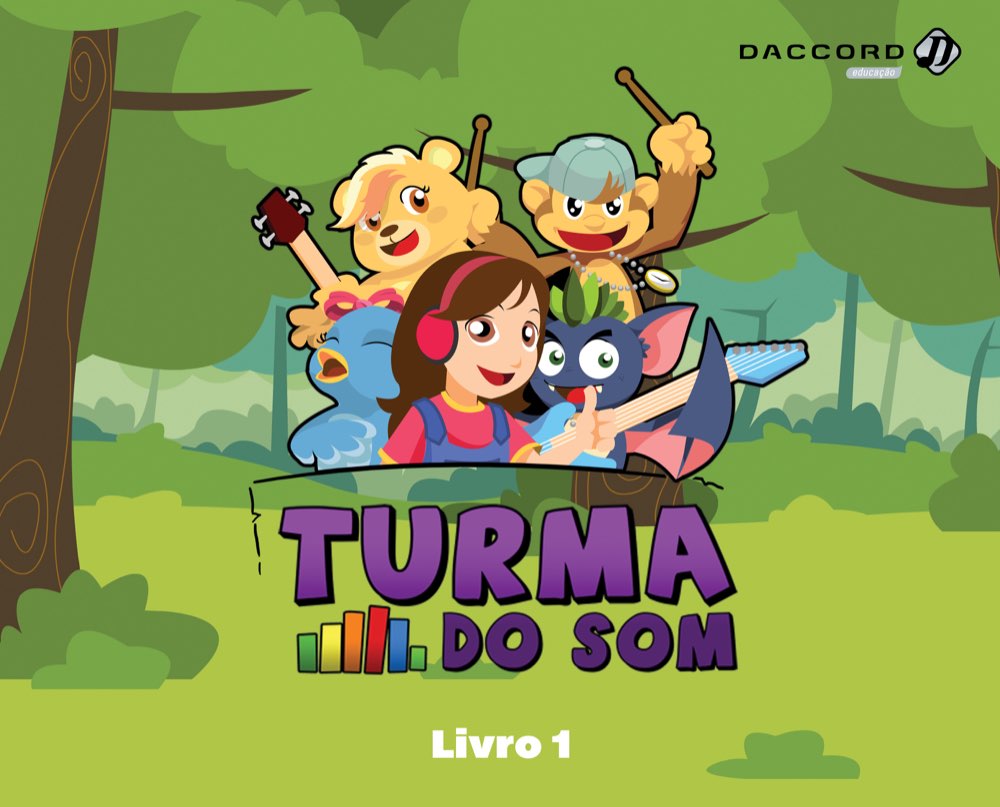
- Turma do Som. An introductory music education project for the early years of elementary school: a teacher's manual, a student book, a DVD with cartoons, interactive games covering timbre, pitch, rhythm and style, a music production application, and teacher training and educational support for schools. It was developed in 2010–2011 and launched in March 2012; that same year, it was already being used in schools in Pernambuco, Minas Gerais and São Paulo. The platform's press kit, dated May 2012, details 25 games organized into four thematic blocks — sound (timbre), pitch, time and structure —, content explained through animated videos featuring characters in the style of Japanese cartoons, and a portal that functions as a social network. Production took "about 15 months" and was carried out by a "multidisciplinary team of developers, musicians, graphic artists and educators"; the company estimated the cost of developing a platform like this at around R$500,000. Cecília Cavalieri França provided educational consulting and eventually became a character in the animations. The commercial launch took place at the 19th Educar/Educador event, May 16–19, 2012, at Centro de Exposições Imigrantes, in São Paulo. The number of schools varies within the press kit itself: one press release mentions five institutions, another nine.
- Curso de Flauta Doce. For the later years of elementary education, designed to meet the compulsory music education requirement established by Law 11,769/2008: the instrument's anatomy and history, fingering, notes, transposition and repertoire, with digital support for the computer lab.
- Livro Educacional Digital (LED). Digital books for publishers, in 2014–2015.
- Sistema Frei.re (2016–2017). Printed and interactive books with games and activities, content customizable with students' photos and names, game creation, in-person educational consulting and performance tracking; in 2018, courses in programming, robotics, making and the creative economy.
Sources: Turma do Som press kit, May 2012; Escribo's Turma do Som (2018) and Curso de Flauta (2015) pages on the Wayback Machine.
Milestones
| Year | Milestone (according to "Our history", 2018, and additional sources) |
|---|---|
| 2001 | Founded with support from the CIn/UFPE incubator; "pioneers in creating music education apps", in the company's own words. |
| 2003 | Applications sold in the US and Europe; products in more than 115 countries; a boxed version of the chord dictionary sold in stores in Australia and New Zealand. |
| 2004 | Among Porto Digital's first companies; the company served on the park's board of directors "for several years". |
| 2006 | Santander Entrepreneurship and Innovation Award, Technology category. |
| 2009 | Finep Innovation Award (Northeast) winner and national finalist; Drums Challenge, "our first iPhone app". |
| 2010 | Investment from Fundo Criatec; launch of Curso de Flauta; Drums Challenge for iPad; support from RHAE-Inovação (CNPq); partnership with Abril Educação (Ática and Scipione). |
| 2011–2012 | Turma do Som; partnership with Editora Saraiva; second Finep Award (2012). |
| 2013 | Partnership with FTD for digital content (PNLD and private schools); public schools begin using Turma do Som and Curso de Flauta; MPT.Br certification in software testing, which the company states was the first among educational technology companies in Brazil; digital books with the Ibep group. |
| 2014 | Endeavor Promessas program; Editora SM becomes a client; MPT.Br level 2 certification for the innovation process. On the company's news page, the tagline becomes "Daccord S.A., a leading company in educational app development" and "developer of digital content for education" — the shift toward education before the corporation continued as Escribo (snapshot from May 30, 2014). |
| 2015 | Finalist for the 2015 Jabuti Award in the Digital Children's Book category with Turma do Som (the company's own post, October 23, 2015). |
| 2017 | Giordano Cabral's departure from the company. |
| 2026 | Escribo (escribo.com) operates as a pedagogical AI platform for early childhood and early primary education, based in Recife. |

Support and recognition cited by the company
BID, Finep, Santander, CNPq, FACEPE, Porto Digital, Criatec, Endeavor Promessas, MPT.Br at levels 1 and 2, and finalist status in the 2015 Jabuti Award.
Frequently asked questions
Which boards does Giordano Cabral serve or has he served on?
The Board of Directors of CESAR, from 2015 to 2026 — vice president until 2020 and president from 2020 to 2026; the board of ARIES, of which he is a founding associate and board member; the technical-scientific council of Instituto Caldeira, since 2026; and the Recife Municipal Council for Science, Technology and Innovation, as alternate for CESAR, since 2024.
Does Giordano Cabral consult for companies?
Yes, in strategy and business intelligence and in the adoption of artificial intelligence, with AI as an element of business transformation (his own statement, September 27, 2026). At Porto Digital, he has been an internationalization consultant for the Management Unit (Núcleo de Gestão) since 2019.
What companies did Giordano Cabral found?
Daccord Music Software (2000), born from the system in his master's thesis, which generates guitar performance from a chord chart, and pre-incubated at Recife BEAT; the game studio MusiGames (2007–2014), which brought Daccord's audio technology into games; and Escribo Inovação para o Aprendizado (2001–2017), an educational technology company.
What is ARIES?
The Recife Agency for Innovation and Strategy, a non-profit association qualified as a municipal Social Organization, created to think through Recife's long-term development. It produced the "Plano Recife 500 Anos" (Recife 500 Years Plan), with a horizon in 2037, and is the delegated manager, in Recife, of FICOL 2 under the Recife–Nantes cooperation, funded by the French Development Agency. Giordano Cabral is one of five founding associates and a board member.