Research area · 2005–
How do you design and evaluate an experience that combines sound, image, gesture and space?
The stated emphasis on Lattes is multimedia software, and the line runs through Giordano Cabral's entire career: systems that teach percussion by responding to gesture (2005), audio on sharing networks (2009), graphics with IMPA (2010), computer vision for malaria diagnosis (2013) and for dance movement analysis (2022), automatic generation of musical visualizations (2021), live video, motion capture and mixed reality with Voxar Labs. It is also the oldest line taught in the classroom: 21 editions of Introdução à Multimídia (Introduction to Multimedia).
01 · Multimedia, computer vision and mixed reality
Contributions
Framework for educational percussion systems · 2005
A Framework to Percussive Educational Systems (IEEE International Symposium on Multimedia, Irvine, 2005; doi.org/10.1109/ism.2005.7), with Suzana Maranhão, Matheus Gois and Erika Araújo: an architecture for systems that teach percussion by responding to gestures. PDF behind an IEEE paywall.
Audio in file-sharing networks · 2009
Improving audio files availability in file sharing networks (WebMedia 2009; doi.org/10.1145/1858477.1858493), with Márcio Dahia, Geber Ramalho, Fernando Trinta and Guerra. In the same period, Cabral took part in the Brazilian Network of Visualization Technologies (Rede Brasileira de Tecnologias de Visualização, CAJOC/RBV II, FINEP, 2008–), coordinated by Geber Ramalho.
Guitar-Leading Band · 2010
Poster at SIGGRAPH 2010 (doi.org/10.1145/1836845.1836937), with Marcelo Cicconet, Luiz Velho and Paulo Cezar Carvalho, from IMPA. The same connection led to service on doctoral examination committees at IMPA in 2009 (Sergio Krakowski) and 2010 (Marcelo Cicconet), alongside Briot and Pachet.
LiVES · 2011
Free real-time video platform, Gabriel Finch's dissertation (UFRPE, 2011), advised by Cabral.
Automatic malaria diagnosis · 2013
A proposal for automatic diagnosis of malaria (WWW 2013 Companion, workshop on public health in the digital age; doi.org/10.1145/2487788.2488022), with Allisson Oliveira and Jones Albuquerque: computer vision applied to a health problem.
Gesture and motion capture · 2013–2022
Avaliando Interfaces Gestuais para Prática de Instrumentos Virtuais de Percussão (SBCM 2013; PDF in the proceedings); V-Conga, a case study on what the Leap Motion captures of gestural nuance (15th SBCM 2015); and the dissertation by Alessandra Aleluia Alves, AMA: um sistema especialista de aprendizado para balé adulto através de feedback verbal automático (No. 1,988, January 18, 2022), advised by Cabral — motion analysis via computer vision in dance.
Ritmaker · 2019
FACEPE/Centelha project led by Rodrigo Pereira: a magnetic board whose pieces are recognized by an augmented reality app for composing; compositions created in class can be saved, exported and shared.
Mandrit · 2021
A system for automatically generating visualizations for rhythmic analysis, and a survey of the challenges of generating musical visualizations, with Rute Moura and Horhanna Almeida (SBCM 2021).
Mixed Reality Laptops · 2022
A protocol for evaluating parallax viewing experiences on consumer laptops, using only the RGB camera already built into the notebook instead of wearable sensors — Fish Tank VR with the Parallax Engine, and an experience-and-presence protocol. Mixed Reality Laptops: a protocol to evaluate enhanced viewing experiences on consumer laptops using Parallax Engine (SVR 2022, p. 29–38; doi.org/10.1145/3604479.3604505), with twelve authors, among them Jarbas Jácome, Walter Correia, Veronica Teichrieb, Fabio Q. B. da Silva, and André L. M. Santos. It is the work from the line of research with Voxar Labs, the CIn's virtual and augmented reality lab directed by Veronica Teichrieb, with which Cabral collaborates.
Auto da Compadecida opera · 2022
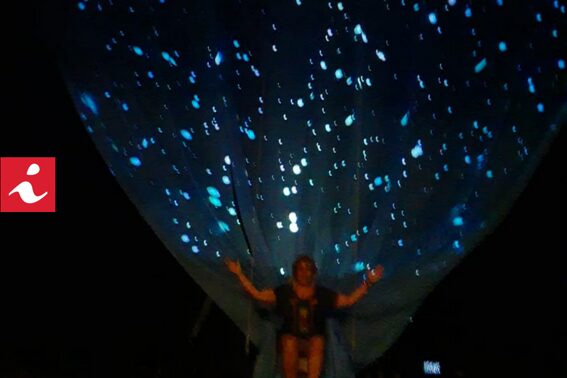
At the Festival de Ópera do Recife (Teatro Santa Isabel, August 4–7, 2022), a generative starry sky and body-controlled fire, by Jarbas Jácome and Ricardo Scholz, with MusTIC and Voxar (CIn portal, August 4, 2022).
02 · Multimedia, computer vision and mixed reality
Examining committees in the field
Doctoral examinations of Alana Elza Fontes da Gama (rehabilitation with virtual and augmented reality, 2015), Manoela Milena Oliveira da Silva (augmented reality in education, 2022) and Ricardo Borges Brazileiro (HyLeD, tangible interfaces, 2026).
Continues at: Voxar Labs and in the courses Introdução à Multimídia and Tendências em Mídia e Interação.