EcoChat: Eco-feedback em IA GenerativaEcoChat: Eco-feedback in Generative AI
O que éWhat it is
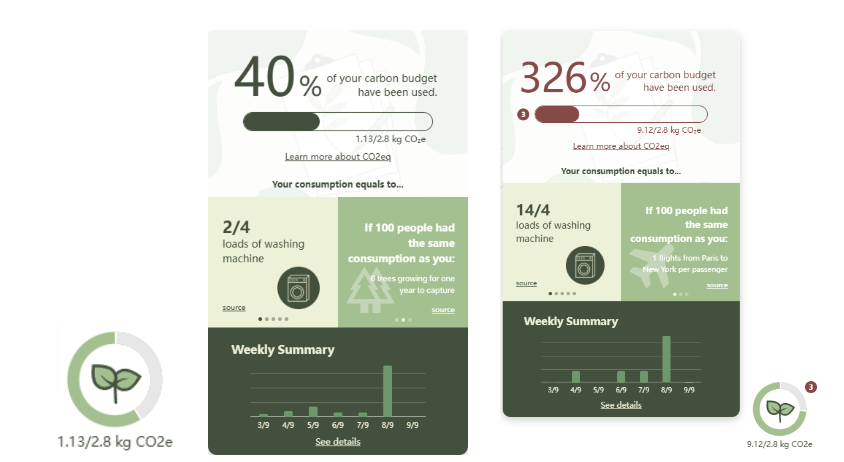
Coordenei a parte brasileira desse projeto, enquanto Georgia Panagiotidou coordenava do lado do Reino Unido. Construímos o EcoChat, uma extensão de Chrome que mostra estimativas de consumo de energia e emissões de carbono direto na interface do ChatGPT, pra entender como as pessoas realmente interpretam esse tipo de informação no uso cotidiano de IA generativa.I coordinated the Brazilian side of this project, while Georgia Panagiotidou coordinated the UK side. We built EcoChat, a Chrome extension that shows energy consumption and carbon emission estimates directly in the ChatGPT interface, to understand how people actually interpret this kind of information during everyday generative AI use.
O que descobrimosWhat we found
Rodamos um estudo de quatro semanas com 52 participantes e 18 entrevistas. O uso das pessoas praticamente não mudou só por ver os números, mas isso não significa que o eco-feedback não teve efeito: ele fez as pessoas pensarem sobre o impacto ambiental da IA generativa e questionarem se determinado uso 'valia a pena' o custo ambiental estimado. Também ficou claro que números crus de energia e carbono são difíceis de reter e interpretar sozinhos, sem referências de comparação.We ran a four-week study with 52 participants and 18 interviews. People's usage barely changed just from seeing the numbers, but that does not mean the eco-feedback had no effect: it made people think about generative AI's environmental impact and question whether a given use was 'worth' its estimated environmental cost. It also became clear that raw energy and carbon numbers are hard to retain and interpret on their own, without comparison references.
ContribuiçõesContributions
- O EcoChat, uma extensão de Chrome funcionando como technology probe, testada em uso real e não só em laboratório.EcoChat, a Chrome extension functioning as a technology probe, tested in real-world use rather than just in the lab.
- Evidência empírica sobre como usuários finais interpretam feedback de sustentabilidade durante uso cotidiano de IA generativa, incluindo o conceito de 'uso razoável' como lente interpretativa.Empirical evidence on how end users interpret sustainability feedback during everyday generative AI use, including the concept of 'reasonable use' as an interpretive lens.
- Diretrizes para futuras interfaces de IA sustentável: comunicar incerteza nas estimativas, contextualizar os números, oferecer pontos de referência significativos, e não colocar a responsabilidade ambiental só no usuário individual.Guidelines for future sustainable AI interfaces: communicate uncertainty in the estimates, contextualize the numbers, offer meaningful reference points, and avoid placing environmental responsibility solely on the individual user.
ParceirosPartners
- L'École de Design Nantes Atlantique
- King's College London
Interesse em colaboraçãoCollaboration interest
Quero entender como pensar tecnologias que apoiem decisões mais conscientes sobre impactos ambientais, não simplesmente mostrando números, mas contextualizando essa informação de forma que ela realmente signifique algo pra quem a recebe. É por isso que venho me interessando cada vez mais por quem está na linha de frente da divulgação científica e jornalística: são essas pessoas que podem tornar os dados de consumo de IA menos opacos pro público em geral. Se você trabalha com Sustainable HCI ou é um profissional que tem uma dor relacionada a esse tema, vamos conversar!I want to understand how to design technologies that support more conscious decisions about environmental impacts, not simply by showing numbers, but by contextualizing that information so it actually means something to the person receiving it. That is why I have become increasingly interested in people working on the front lines of science and journalism communication: they are the ones who can make AI consumption data less opaque to the general public. If you work in Sustainable HCI or are a professional who has a pain point related to this topic, let's talk!
Fale comigoContact me →